Relationship communication tools come in two main flavors: books that teach you a framework and workbooks that make you practice it, and the right choice depends on how much structure your relationship needs. After comparing the nine most popular options, Nonviolent Communication stands out as the best overall pick because its empathy-first method applies to every relationship in your life, not just romantic ones. For couples who want a guided, exercise-heavy approach instead of theory, Reconnect: A Marriage Counseling Workbook is the strongest workbook-style alternative, while The Seven Principles for Making Marriage Work is the most research-backed option if you want science behind the advice. The main tradeoff across the category is depth versus accessibility — dense, evidence-based guides take longer to apply, while lighter books deliver quick scripts but less lasting change. Keep reading for the full breakdown, including who each pick suits best and which ones to skip.

Get gifts for the two of you delivered free — and shop member deals
- Fast, free delivery on millions of items
- Access to Prime Big Deal Days deals on October 6–7
- Prime Video, Amazon Music and more included
Key Takeaways
- Workbook-style tools (Reconnect, Love More Fight Less) outperform pure theory books for couples in active conflict because exercises force practice, while reading alone rarely changes habits.
- Nonviolent Communication earned the top spot because it is the only pick whose framework extends beyond romantic relationships to workplaces, family, and friendships — doubling its value per dollar.
- The Seven Principles for Making Marriage Work is the most clinically validated option, built on decades of Gottman research, but it is marriage-centric and heavier reading than couples in crisis can absorb quickly.
- Script-based books like Communicate Your Feelings (Without Starting a Fight) are the fastest to apply — often same-day — but risk feeling formulaic if deeper conflict patterns go unaddressed.
- Several budget titles (4 Essential Keys, Communication Miracles for Couples) overlap heavily in content, so paying a few dollars more for a structured challenge or workbook usually buys noticeably more utility.
| Nonviolent Communication: A Language of Life |  | Best Overall | Format: Paperback / eBook / Audiobook | Category: Communication framework and relationship psychology | Core method: Four-part NVC process: observations, feelings, needs, requests | VIEW LATEST PRICE | See Our Full Breakdown |
| 4 Essential Keys to Effective Communication in Love, Life, Work–Anywhere!: Including the ’12-Day Communication Challenge!’ |  | Best Value for Beginners | Format: Paperback / eBook | Category: General communication skills self-help | Structure: 4 core keys plus a 12-day guided challenge | VIEW LATEST PRICE | See Our Full Breakdown |
| The Seven Principles for Making Marriage Work: A Practical Guide from the Country’s Foremost Relationship Expert |  | Best for Married Couples | Format: Paperback / eBook / Audiobook | Category: Marriage and relationship science | Basis: Longitudinal clinical research on married couples | VIEW LATEST PRICE | See Our Full Breakdown |
| Love More, Fight Less: Communication Skills Every Couple Needs | 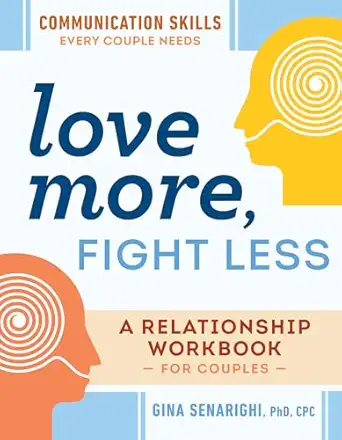 | Best Workbook Format | Format: Paperback workbook | Category: Couples communication workbook | Structure: Guided exercises and prompts for couples | VIEW LATEST PRICE | See Our Full Breakdown |
| Effective Communication for a Healthy Relationship: Scientifically Proven Strategies to Resolve Conflicts and Strengthen Emotional Connection |  | Best for Conflict Resolution | Format: Paperback / eBook | Category: Couples communication and conflict resolution | Approach: Research-informed practical strategies | VIEW LATEST PRICE | See Our Full Breakdown |
| Reconnect: A Marriage Counseling Workbook |  | Best Workbook Format | Format: Paperback workbook | Primary approach: Guided exercises and structured conversations | Target audience: Married or long-term couples | VIEW LATEST PRICE | See Our Full Breakdown |
| Communication Skills for Couples: Guide to Improve Communication, Resolve Conflict, Deepen Intimacy, and Strengthen Marriage |  | Best for Conflict Resolution | Format: Paperback guide | Primary focus: Conflict resolution, intimacy, and communication | Approach: Practical, actionable strategies | VIEW LATEST PRICE | See Our Full Breakdown |
| Communication Miracles for Couples: Easy and Effective Tools to Create More Love and Less Conflict |  | Best Quick-Read Pick | Format: Paperback | Primary focus: Quick communication tools for love and conflict reduction | Approach: Simple, immediately applicable techniques | VIEW LATEST PRICE | See Our Full Breakdown |
| Communicate Your Feelings (Without Starting a Fight): What to Say and What Not to Say to Your Partner |  | Best for Emotional Expression | Format: Paperback / digital | Primary focus: Expressing feelings without conflict | Approach: Scripted examples of effective vs. harmful phrasing | VIEW LATEST PRICE | See Our Full Breakdown |
| relationship communication tool | Format | Category | Scope | Time commitment |
|---|---|---|---|---|
| Nonviolent Communication: A La | Paperback / eBook / Audiobook | Communication framework and relationship psychology | Personal and professional relationships | Moderate to high — ongoing practice required |
| 4 Essential Keys to Effective | Paperback / eBook | General communication skills self-help | Love, life, and work contexts | Low — roughly 12 days of short daily practice |
| The Seven Principles for Makin | Paperback / eBook / Audiobook | Marriage and relationship science | Marriage and long-term committed partnerships | High — full-length book with couple exercises |
| Love More | Paperback workbook | Couples communication workbook | Romantic couples — connection and conflict | Moderate — ongoing joint exercise sessions |
| Effective Communication for a | Paperback / eBook | Couples communication and conflict resolution | Romantic relationships | Low to moderate |
| Reconnect: A Marriage Counseli | Paperback workbook | — | — | — |
| Communication Skills for Coupl | Paperback guide | — | — | — |
| Communication Miracles for Cou | Paperback | — | — | — |
| Communicate Your Feelings | Paperback / digital | — | — | — |
More Details on Our Top Picks
Nonviolent Communication: A Language of Life
Nonviolent Communication earns the top spot because it attacks the root of most relationship conflict: the language couples default to when they’re hurt or angry. Rather than offering scripts for specific fights, it teaches a transferable framework — observations, feelings, needs, requests — that works whether you’re navigating a disagreement with a partner or a tense conversation at work. Compared with The Seven Principles for Making Marriage Work, which leans on research and marriage-specific case studies, this book gives readers a daily-use vocabulary they can apply immediately. The tradeoff is depth over speed: the method feels unnatural at first and takes real practice to internalize. Where Love More, Fight Less hands you exercises, this one asks you to rethink how you speak. Buyers who want quick fixes may bounce off it; buyers who want lasting change will not.
Pros:- Teaches a universal framework applicable to romance, family, and workplace conflicts
- Rooted in a widely respected, long-established communication methodology
- Changes how you language disagreements rather than just managing symptoms
- Useful for one reader alone — no partner participation required to start
Cons:- The four-step method feels stilted and artificial during the learning period
- Not couple-specific, so readers wanting marriage-focused exercises get less direct guidance
Best for: Couples and individuals who want a foundational communication framework they can apply in every relationship, not just romantic ones
Not ideal for: Readers seeking quick, script-based fixes — the method requires weeks of deliberate practice before it feels natural
- Format:Paperback / eBook / Audiobook
- Category:Communication framework and relationship psychology
- Core method:Four-part NVC process: observations, feelings, needs, requests
- Scope:Personal and professional relationships
- Time commitment:Moderate to high — ongoing practice required
- Partner participation needed:No — can be applied by one person
Our verdict“This is the pick for anyone who wants to rebuild their communication habits from the ground up rather than patch individual arguments.”
4 Essential Keys to Effective Communication in Love, Life, Work–Anywhere!: Including the ’12-Day Communication Challenge!’
For readers intimidated by dense relationship theory, 4 Essential Keys is the friendliest on-ramp in this lineup. Its standout feature is the 12-Day Communication Challenge, which breaks skill-building into short daily actions — a structure that Nonviolent Communication deliberately lacks. Where that book asks you to internalize a philosophy, this one hands you a two-week plan with a clear finish line, which matters enormously for follow-through. It’s also the broadest in scope, covering love, work, and friendships, so it suits buyers who want one affordable book to cover multiple contexts. The tradeoff: breadth comes at the cost of depth. Compared with Effective Communication for a Healthy Relationship, the relationship-specific advice here is thinner, and couples in serious conflict will likely need something more targeted afterward. Think of it as a low-cost starting point, not a destination.
Pros:- The 12-day challenge turns abstract advice into a concrete daily routine
- Covers romantic, professional, and personal communication in one inexpensive book
- Low time commitment — approachable for reluctant or busy readers
- Inexpensive entry point compared with workbook-style alternatives
Cons:- Broad scope means relationship-specific guidance is comparatively shallow
- Exercises are lighter-weight than the structured workbook material in Love More, Fight Less
Best for: Budget-conscious readers and communication beginners who want a short, structured program covering relationships and everyday life
Not ideal for: Couples in active crisis — the generalist, entry-level content won’t go deep enough on serious conflict repair
- Format:Paperback / eBook
- Category:General communication skills self-help
- Structure:4 core keys plus a 12-day guided challenge
- Scope:Love, life, and work contexts
- Time commitment:Low — roughly 12 days of short daily practice
- Partner participation needed:No
Our verdict“Buy this if you want an affordable, two-week kickstart to better communication habits across all areas of life.”
The Seven Principles for Making Marriage Work: A Practical Guide from the Country’s Foremost Relationship Expert
The Seven Principles for Making Marriage Work is the most research-anchored pick here, drawing on decades of observational studies of real couples rather than anecdote. That evidence base is exactly what separates it from Love More, Fight Less: instead of generic exercises, it explains why marriages fail — the famous Four Horsemen — and gives couples diagnostic tools to spot their own patterns. Compared with Nonviolent Communication, it’s far more marriage-specific, covering intimacy, friendship, and shared meaning alongside communication technique. The tradeoffs are real, though. It’s longer and denser than everything else in this roundup, some readers find later chapters repetitive, and it presumes a committed long-term partnership — dating couples and non-romantic contexts are outside its lane. For married or engaged pairs willing to invest the reading time, it repays the effort better than any lighter alternative.
Pros:- Grounded in decades of clinical research on real couples
- Covers communication, intimacy, friendship, and conflict as one connected system
- Diagnostic concepts like the Four Horsemen help couples identify destructive patterns
- Includes practical exercises and questionnaires alongside the theory
Cons:- Longer and denser than every other pick in this lineup
- Some readers find later chapters repetitive
Best for: Married or long-term committed couples who want research-backed insight into why their relationship patterns form and how to change them
Not ideal for: New couples or readers wanting a quick exercise book — it’s long, dense, and written around marriage specifically
- Format:Paperback / eBook / Audiobook
- Category:Marriage and relationship science
- Basis:Longitudinal clinical research on married couples
- Scope:Marriage and long-term committed partnerships
- Time commitment:High — full-length book with couple exercises
- Partner participation needed:Yes, for most exercises
Our verdict“The deepest, most evidence-driven choice for committed couples who want to understand their relationship, not just manage arguments.”
Love More, Fight Less: Communication Skills Every Couple Needs
Where most books in this roundup tell you about communication, Love More, Fight Less makes you practice it. The workbook format — prompts, exercises, and structured activities for two — is what distinguishes it from 4 Essential Keys, whose 12-day challenge is lighter and solo-friendly. This is the right choice for couples who’ve read theory and stalled: doing the exercises together creates the conversations that reading alone never does. Compared with The Seven Principles for Making Marriage Work, it’s faster and more action-oriented, trading research depth for immediate usability. That’s also its main drawback — couples with deeply entrenched conflict patterns will find the exercises insufficient without deeper work, and success depends entirely on both partners actually doing the homework. A reluctant partner turns this into an expensive blank notebook. But for motivated pairs, it’s the most direct route from reading to doing.
Pros:- Workbook format converts reading into actual partner conversations
- Exercises target both everyday connection and conflict resolution
- Faster to work through than research-heavy alternatives
- Structured prompts reduce the awkwardness of starting hard conversations
Cons:- Requires buy-in from both partners to deliver any value
- Shallow on underlying causes of chronic conflict compared with The Seven Principles
Best for: Motivated couples who learn by doing and want guided exercises to work through together, not just theory to read
Not ideal for: Couples where one partner won’t participate, or those with serious entrenched conflict needing deeper intervention
- Format:Paperback workbook
- Category:Couples communication workbook
- Structure:Guided exercises and prompts for couples
- Scope:Romantic couples — connection and conflict
- Time commitment:Moderate — ongoing joint exercise sessions
- Partner participation needed:Yes — essential
Our verdict“The best choice for two willing partners who want guided practice rather than another book of theory.”
Effective Communication for a Healthy Relationship: Scientifically Proven Strategies to Resolve Conflicts and Strengthen Emotional Connection
This book’s positioning is narrower and sharper than the others: it’s built specifically around resolving conflict and rebuilding emotional connection, which makes it the go-to for couples whose primary problem is recurring fights. Compared with 4 Essential Keys, it trades general-life applicability for relationship depth; compared with The Seven Principles for Making Marriage Work, it’s more accessible and directly tactical, focusing on actionable strategies rather than a full research framework. The emphasis on scientifically proven methods gives anxious readers confidence they’re not just getting opinion. The tradeoff is focus becoming limitation: readers wanting broader communication skills for work or family will outgrow it quickly, and some may find the content too general in parts — solid strategies, but not much that experienced self-help readers haven’t encountered. For conflict-heavy couples who want a targeted, moderately priced fix, it earns its slot.
Pros:- Tightly focused on conflict resolution rather than diluted across multiple life areas
- Emphasizes emotionally grounded techniques, not just scripted phrases
- More affordable and faster to read than research-heavy alternatives
- Directly addresses the misunderstandings that fuel repeated fights
Cons:- Some content may feel general or familiar to experienced self-help readers
- Narrower scope than Nonviolent Communication or 4 Essential Keys
Best for: Couples stuck in repeating arguments who want targeted, evidence-flavored strategies for conflict and emotional reconnection
Not ideal for: Readers wanting all-purpose communication skills — its narrow relationship-conflict focus limits reuse elsewhere
- Format:Paperback / eBook
- Category:Couples communication and conflict resolution
- Approach:Research-informed practical strategies
- Scope:Romantic relationships
- Time commitment:Low to moderate
- Partner participation needed:Helpful but not strictly required
Our verdict“A focused, budget-friendly pick for couples whose number one issue is fighting, rather than communication in general.”
Reconnect: A Marriage Counseling Workbook
Most books on this list tell you how to communicate better; this one makes you actually practice it. The guided exercises and structured conversations are the whole point — couples answer prompts together rather than passively reading theory. Compared with Communication Skills for Couples, which reads more like a strategy guide, Reconnect demands participation, and that’s its edge: filling in pages side by side forces the kind of dialogue couples keep postponing. The tradeoff is real, though. A workbook only works if both partners commit to doing the work, so a motivated partner paired with a reluctant one will likely stall halfway through. And because the exercises target long-term growth rather than quick fixes, results arrive slowly. For couples who finish what they start, this pick makes the most sense as the hands-on companion to the more conceptual titles in this roundup.
Pros:- Structured exercises turn communication advice into actual practice
- Guided conversation prompts break the ice on hard topics
- Designed for long-term relationship growth, not surface-level tips
- Mirrors the format of professional counseling at a fraction of the cost
Cons:- Requires sustained commitment from both partners to complete
- Thin on theory — couples wanting to understand the why behind their patterns should pair it with a deeper book like Nonviolent Communication
Best for: Committed couples who want a structured, therapy-adjacent program they can work through together week by week
Not ideal for: Couples where one partner is checked out or unwilling to do homework — a fill-in workbook goes nowhere without buy-in from both sides
- Format:Paperback workbook
- Primary approach:Guided exercises and structured conversations
- Target audience:Married or long-term couples
- Relationship stage:Maintenance and strengthening
- Time investment:Ongoing, multi-week completion
- Style:Interactive, therapy-inspired
Our verdict“Buy this if you and your partner will genuinely sit down and do the exercises together — it’s the practice partner to the more theory-driven books in this guide.”
Communication Skills for Couples: Guide to Improve Communication, Resolve Conflict, Deepen Intimacy, and Strengthen Marriage
Where Communication Miracles for Couples keeps things light and quick, this guide goes deeper on the conflict side of the equation, pairing de-escalation tactics with exercises aimed at deepening intimacy. That two-front approach is its differentiator: it treats fights not as isolated events but as symptoms of disconnection, then works both angles. Compared with Reconnect, it’s the better choice for couples whose main pain point is recurring arguments rather than general drift, since the strategies here are framed around resolving specific disputes. The drawback is pacing. This is a strategy-heavy read, and the payoff depends on applying the material consistently over weeks — readers wanting an overnight fix will be disappointed. It also lacks the interactive structure of a workbook, so accountability rests entirely on the couple. Still, for argument-heavy relationships, this is the most targeted option in the lineup.
Pros:- Directly addresses recurring conflict patterns with actionable tactics
- Covers intimacy and communication together, not in isolation
- Practical strategies rather than abstract relationship theory
- Broad scope makes it useful across many relationship stages
Cons:- Results require consistent effort over time, not a quick read
- No interactive exercises, so it’s easier to read and forget than a workbook like Reconnect
Best for: Couples stuck in repeating fight cycles who want a strategy-focused guide covering both conflict resolution and emotional reconnection
Not ideal for: Casual daters or couples who rarely argue and mainly want fun connection prompts — the conflict-heavy framing would feel like overkill
- Format:Paperback guide
- Primary focus:Conflict resolution, intimacy, and communication
- Approach:Practical, actionable strategies
- Target audience:Couples and married partners
- Time investment:Read plus ongoing practice
- Style:Strategy-driven, results-oriented
Our verdict“The strongest pick here for couples who fight more than they’d like and want a playbook for both stopping the battles and rebuilding closeness.”
Communication Miracles for Couples: Easy and Effective Tools to Create More Love and Less Conflict
Not every couple needs a research-backed tome like The Seven Principles for Making Marriage Work. This book’s whole pitch is simplicity: short, easy-to-implement tools you can try the same evening, aimed at producing more warmth and fewer blowups. That accessibility is why it earns a spot — compared with Communication Skills for Couples, it trades depth for speed, and for a relationship in a rough patch, fast-acting tactics can matter more than comprehensive theory. The tradeoff cuts both ways. Easy tools solve easy problems; couples with entrenched conflict patterns or deeper trust issues will likely outgrow this quickly and need something more substantial. The writing also leans on familiar relationship-book ground, so readers well-versed in the genre may find little that feels new. As a first step or a refresher, though, its low-friction approach is hard to beat in this lineup.
Pros:- Genuinely easy-to-apply techniques with a low learning curve
- Quick to read and digest, even for non-readers
- Balances reducing conflict with increasing affection
- Low-cost, low-commitment entry point to couples communication work
Cons:- Shallow depth compared with heavier titles like Nonviolent Communication
- Experienced readers of relationship books may find the content repetitive
Best for: Busy couples or communication-book newcomers who want simple techniques they can apply immediately without a big time commitment
Not ideal for: Couples dealing with deep-seated conflict or serious trust issues — the lightweight tools won’t carry that load
- Format:Paperback
- Primary focus:Quick communication tools for love and conflict reduction
- Approach:Simple, immediately applicable techniques
- Target audience:Couples at any stage
- Time investment:Low — short read, instant application
- Style:Accessible, tool-focused
Our verdict“Pick this if you want the fastest path from reading to doing — just know it’s a starter tool, not a repair manual for serious problems.”
Communicate Your Feelings (Without Starting a Fight): What to Say and What Not to Say to Your Partner
Most entries in this roundup address communication as a two-way skill; this one zooms in on the single hardest half — saying what you feel without triggering a fight. The what-to-say / what-not-to-say framing is unusually concrete for this genre: instead of broad principles, readers get script-level guidance they can adapt in the moment. Compared with Communication Miracles for Couples, which covers conflict reduction broadly, this is narrower and more personal — it’s about your delivery, not the couple’s system. That focus is also the limitation. It won’t help with listening skills, conflict patterns, or repairing after arguments, so it works best as a supplement alongside a broader title rather than a standalone fix. There’s also little visibility into reviews or format details, so buyers are taking somewhat more on faith. For anyone whose feelings come out as accusations, though, this fills a gap the other books leave open.
Pros:- Hyper-specific focus on expressing feelings without escalation
- Concrete say-this-not-that guidance rather than vague principles
- Supports emotional wellness alongside relationship health
- Narrow scope makes it fast to read and apply
Cons:- One-sided focus — doesn’t address listening or couple-level dynamics
- Limited review and format information available to buyers
Best for: Partners who struggle to voice needs and emotions without their conversations turning into arguments
Not ideal for: Couples seeking a complete communication overhaul — this covers expression only, not listening, repair, or conflict systems
- Format:Paperback / digital
- Primary focus:Expressing feelings without conflict
- Approach:Scripted examples of effective vs. harmful phrasing
- Target audience:Individual partners and couples
- Time investment:Short, focused read
- Style:Practical and prescriptive
Our verdict“A smart supplemental buy for the partner whose honest conversations keep ending in fights, best paired with a broader guide like Love More, Fight Less.”

How We Picked
I evaluated each tool against five buyer-relevant criteria: actionability (does it give concrete phrases, scripts, or exercises rather than abstract advice), evidence base (is the method grounded in research or clinical practice), accessibility (can a stressed couple actually start using it this week), versatility (does it work for dating couples, long marriages, and non-romantic relationships alike), and format fit (book, workbook, or challenge structure). Tools that required a partner’s full cooperation to get any value scored lower than tools a single motivated person could benefit from immediately.
Ranking favored tools that balance depth with usability. Nonviolent Communication ranked first for its proven framework and broad applicability; The Seven Principles followed for research rigor despite a narrower marriage focus. Guided workbooks ranked mid-to-high because they drive real behavior change, while shorter script-based books placed lower — not because they are bad, but because their fixes are shallower and less durable than the competition.
| relationship communication tool | Format | Category | Scope | Time commitment |
|---|---|---|---|---|
| Nonviolent Communication: A La | Paperback / eBook / Audiobook | Communication framework and relationship psychology | Personal and professional relationships | Moderate to high — ongoing practice required |
| 4 Essential Keys to Effective | Paperback / eBook | General communication skills self-help | Love, life, and work contexts | Low — roughly 12 days of short daily practice |
| The Seven Principles for Makin | Paperback / eBook / Audiobook | Marriage and relationship science | Marriage and long-term committed partnerships | High — full-length book with couple exercises |
| Love More | Paperback workbook | Couples communication workbook | Romantic couples — connection and conflict | Moderate — ongoing joint exercise sessions |
| Effective Communication for a | Paperback / eBook | Couples communication and conflict resolution | Romantic relationships | Low to moderate |
| Reconnect: A Marriage Counseli | Paperback workbook | — | — | — |
| Communication Skills for Coupl | Paperback guide | — | — | — |
| Communication Miracles for Cou | Paperback | — | — | — |
| Communicate Your Feelings | Paperback / digital | — | — | — |
Factors to Consider When Choosing Relationship Communication Tools
Before choosing a specific title, it helps to understand what actually separates a useful communication tool from one that sits unread on a nightstand. These are the factors that shaped my rankings and the mistakes I see buyers make most often.Book or Workbook? Match the Format to Your Situation
The single biggest decision is whether you need understanding or practice. Traditional books explain why communication breaks down, which works well for self-motivated readers in stable relationships who want to prevent problems. Workbooks and exercise-based guides force repetition — filling out prompts, completing weekly challenges, answering partner questions — which is what actually rewires habits in relationships already stuck in negative patterns. A common mistake is buying a workbook when only one partner is willing to participate; most workbook exercises collapse without buy-in from both people. If you are the only one working on the relationship right now, start with a solo-readable book and introduce exercises later. Couples in therapy often get the most from workbooks used as homework between sessions.
Research-Backed vs. Pop Psychology
Some of these tools are built on decades of clinical observation — the Gottman method behind The Seven Principles is the clearest example — while others are assembled from popular advice with limited evidence behind them. Research-backed material tends to explain predictable failure patterns, like the specific warning signs that precede relationship collapse, which helps couples recognize their own trajectory. The tradeoff is density: evidence-based books demand more reading time and patience, and couples in acute crisis may abandon them before reaching the useful chapters. Pop-psychology titles are easier to consume and often more encouraging in tone, but their advice can feel interchangeable between books. If your conflicts are recurring and serious, the research-backed route pays off; if you argue about dishes and scheduling, a lighter title will probably cover your needs.
Script-Based Tools: Powerful but Limited
Books built around exact phrases to say and avoid are the fastest way to see change — you can use a better sentence tonight. This matters because early wins build momentum and goodwill between partners. The limitation is that scripts treat symptoms rather than causes; if resentment, trust issues, or mismatched needs are underneath the arguments, the right phrase only delays the real conversation. Buyers frequently overestimate what a scripts book can fix, then feel the book failed them. My advice: use script-based tools as a first step to de-escalate daily friction, and pair them with a deeper framework if the same fights keep returning. They also work well for partners who resist anything that feels like homework.
Stage of Relationship Matters More Than Book Quality
A tool perfect for a 30-year marriage can feel premature for a couple dating six months, and vice versa. Marriage-focused guides assume shared finances, cohabitation stress, and long-horizon commitment — topics that feel irrelevant or heavy for newer couples. Conversely, general communication books may not address the entrenched patterns that develop over decades together. Dating and engaged couples get the most from short, skill-building titles; established marriages benefit from research-heavy guides and workbooks that address repair after repeated conflict. A common purchasing error is gifting a marriage-repair book to a partner who has not agreed there is a problem, which usually backfires. Match the tool to where the relationship actually is, not where you wish it were.
Cost, Reread Value, and Buying Mistakes
Most of these tools cost between ten and twenty dollars, so price should barely influence your choice — format fit matters far more than saving five dollars. What does affect value is rereadability and shareability: framework books get revisited for years, while one-shot challenge books are essentially consumable. A frequent mistake is buying multiple overlapping beginner titles instead of one stronger pick plus a workbook; the content in entry-level communication books overlaps heavily. Another is buying only one copy when the book is meant to be worked through together — Kindle sharing limits and single physical copies quietly sabotage couples’ plans. Finally, avoid treating any single book as a substitute for couples therapy when there is betrayal, contempt, or abuse in the relationship; books are tools for improvement, not interventions for serious harm.
Frequently Asked Questions
Can a book really fix our communication problems, or do we need counseling?
A well-matched book can resolve skill-based communication problems — poor phrasing, defensiveness, interrupting, avoidance — because these are learned habits that better habits can replace. Books and workbooks are especially effective for couples who still respect each other and genuinely want to change, which describes most couples arguing about daily friction. Counseling becomes the better choice when problems include contempt, betrayal, addiction, or a fundamental disagreement about whether the relationship should continue. A reasonable approach is to work through one strong book together for six to eight weeks and honestly evaluate whether the frequency and intensity of conflicts have dropped. Many couples also use books as a bridge while waiting for a therapy appointment, since waitlists for good couples counselors can run months.
Which of these tools works if my partner won’t read it with me?
Framework books like Nonviolent Communication and 4 Essential Keys are the best solo options because they change how you communicate, and a single person shifting their patterns often shifts the whole dynamic. When one partner stops criticizing, listens reflectively, and expresses needs without blame, the other partner’s defensiveness frequently drops without any reading on their part. Script-based books also work solo since you can deploy better phrases immediately in real conversations. The tools to avoid without partner participation are the paired workbooks like Reconnect, whose exercises mostly require both people to answer prompts. A useful tactic is to apply solo techniques for a month and let visible changes do the recruiting for you.
What’s the difference between the Gottman book and the NVC book — which should I buy first?
The Seven Principles for Making Marriage Work explains what makes relationships succeed or fail, drawing on observational research of thousands of couples, including the famous warning signs that predict divorce. Nonviolent Communication teaches how to speak and listen in a specific, repeatable way, built around observations, feelings, needs, and requests. If your arguments feel confusing — you fight but don’t know why — the Gottman book will give you a diagnostic map first. If you understand your problems but can’t stop the hostile tone, NVC gives you the daily mechanics sooner. Couples with budget for both typically read Gottman first for perspective and NVC second for practice, and the order genuinely matters less than finishing whichever one you start.
Are the workbooks in this roundup actually different from each other?
Yes, though the differences are about structure and tone rather than core content, since most draw from similar psychology. Reconnect is the most therapy-adjacent, walking through structured sessions with reflection questions that mirror what a counselor would assign between appointments. Love More, Fight Less is organized around discrete skill-building exercises with a more encouraging, coach-like voice, which suits couples who find clinical language off-putting. The 12-Day Communication Challenge in 4 Essential Keys sits between categories — it is a book with a timed practice component, better for building momentum than deep repair. If you have already worked through one workbook and saw benefits, a second one from this list will feel repetitive; spending that money on a counseling session instead usually delivers more.
Which pick is best for a relationship that isn’t in crisis but wants to improve?
Preventive buyers should reach for Nonviolent Communication or Communication Miracles for Couples rather than the repair-oriented titles. When there is no active conflict to resolve, heavy workbooks can feel like solving a problem you don’t have, and marriage-repair framing can even introduce anxiety about problems you hadn’t considered. Short, skill-focused tools let you practice better listening and expression in low-stakes moments, which builds the reserves you will need during future stress. The Gottman book also works well preventively because its research on what sustains long-term relationships is arguably more useful before problems appear. The main mistake preventive couples make is choosing the most intensive tool available out of ambition, then abandoning it within a chapter.
Conclusion
The right pick here depends less on quality — all nine are credible — and more on what your relationship needs right now. For the best overall choice, Nonviolent Communication wins on framework strength and versatility, working equally well for romance, family, and work. The best value pick is 4 Essential Keys to Effective Communication, which bundles a full method plus a 12-day challenge at the lowest price point in the lineup. For the most premium, research-backed option, The Seven Principles for Making Marriage Work justifies its depth with decades of clinical evidence behind every chapter. Beginners and couples new to intentional communication should start with Communication Miracles for Couples, the gentlest and most accessible entry point. For specific needs: choose Reconnect if you want a counseling-style workbook, Communicate Your Feelings (Without Starting a Fight) if you need immediate scripts to stop nightly arguments, and Love More, Fight Less if a lighter exercise format fits you and your partner better than clinical material. Whatever you choose, pick one, work it together, and give it a real month before judging the results.
Fall Picks
fall essentials
As an affiliate, we earn on qualifying purchases.