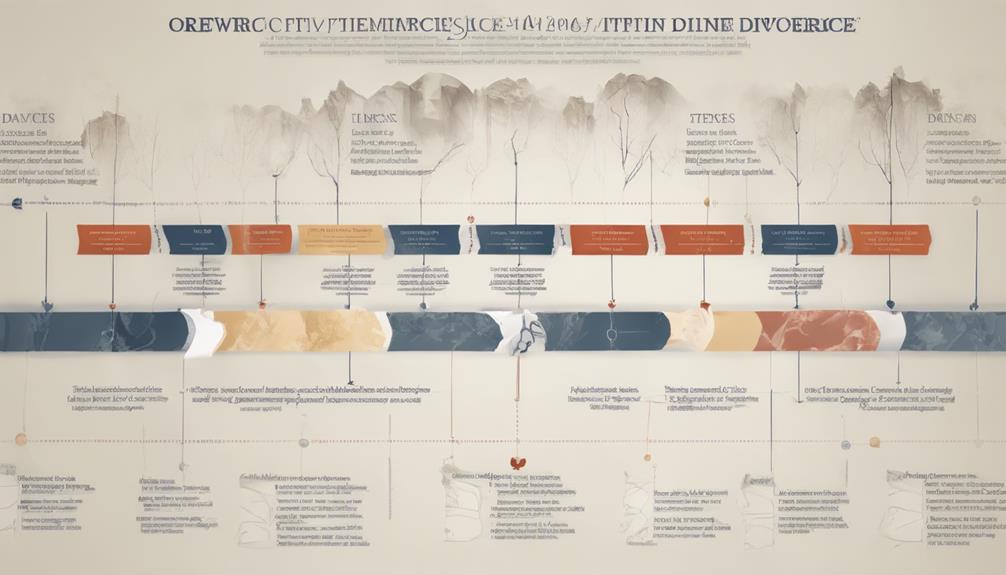

To file for divorce in Texas, you must meet residency requirements—living in Texas for at least six months and in your filing county for 90 days. Then, complete the original petition form and file it at the appropriate district court, either in person or online. After serving your spouse with the papers, you’ll need to wait at least 60 days before finalizing the divorce, which involves attending a hearing or submitting a sworn affidavit. Keep going for detailed steps on steering the process smoothly.
Key Takeaways
- Verify residency requirements: lived in Texas for 6 months and in the filing county for 90 days.
- Complete and file the Original Petition for Divorce at the appropriate district court.
- Serve the divorce papers to your spouse through sheriff or process server.
- Attend a final hearing or submit a sworn affidavit if uncontested to finalize the divorce.
- Obtain the judge’s final decree to legally end the marriage.

Filing for divorce in Texas involves several essential steps you need to guarantee the process goes smoothly. The first step is confirming that you meet the state’s residency requirements. You or your spouse must have lived in Texas for at least six months before filing, and either of you must have resided in the specific county where you plan to file for at least 90 days. If either of you served in the U.S. armed forces outside Texas, that time still counts toward meeting residency. If you and your spouse live in different counties, you can file in the county where either of you resides. To protect your privacy, you also have the option to verify residency anonymously through the Texas Address Confidentiality Program.
To file for divorce in Texas, you must meet residency requirements: six months in state and 90 days in the county.
Next, you need to determine the grounds for divorce. Texas recognizes both no-fault and fault-based grounds. The most common no-fault reason is insupportability, which means the marriage has become impossible to repair due to conflict. Fault-based grounds include adultery, cruelty, felony conviction, abandonment, or living apart for a certain period. Your choice of grounds can influence issues like support and property division, so it’s worth considering whether an uncontested, no-fault divorce suits your situation, as it tends to be quicker and simpler.
Once residency and grounds are settled, you can prepare your Petition for Divorce. This involves completing the appropriate Original Petition for Divorce form and filing it at the district court courthouse in your county. You can file in person or electronically through eFileTexas.gov, which offers a guided process. The court fees vary but can sometimes be waived if you submit an Affidavit of Inability to Pay Court Costs. When filing, you’ll formally ask the court to dissolve your marriage and specify your desired terms regarding support, property, and custody if applicable. Remember, different forms are available for opposite-sex and same-sex marriages. Additionally, ensuring your paperwork accurately reflects your circumstances can prevent delays in the process.
After filing, you must serve the divorce petition to your spouse. This involves delivering official notice, either through a sheriff or a process server. If your spouse responds, they may file an answer, and your case could become contested. If they don’t respond, you can request a default judgment. During the process, both parties may engage in discovery to exchange information or participate in mediation to resolve disputes. Temporary orders related to custody, support, or property can be issued by the court to maintain stability during the divorce. The court may also require a waiting period of at least 60 days before the divorce can be finalized. A mandatory waiting period of at least 60 days applies before finalizing the divorce, unless there’s family violence involved. You’ll attend a final hearing, often called a prove-up, where the judge reviews your requests and signs the final decree. If your divorce is uncontested, you might be able to submit a sworn affidavit instead of a full hearing. Once the judge signs the decree, your marriage officially ends. Throughout this process, legal fees may apply, but resources are available to help, especially if you’re handling an uncontested case or have limited finances. Proper preparation and understanding of the divorce process can help ensure a smoother experience.
Texas divorce petition form
As an affiliate, we earn on qualifying purchases.
As an affiliate, we earn on qualifying purchases.
Frequently Asked Questions
How Long Does the Divorce Process Typically Take in Texas?
The divorce process in Texas typically takes about 6 months to a year, but it can be shorter or longer depending on your situation. If you and your spouse agree on everything, it might close in around 2 to 4 months. However, if you’ve got disagreements or complex issues like property or custody, it could extend beyond a year. Factors like court schedules and paperwork also affect the timeline.
Can I File for Divorce if My Spouse Refuses to Cooperate?
Yes, you can file for divorce even if your spouse refuses to cooperate. Texas law allows you to serve them with the divorce petition, and if they ignore it, you can request a default judgment. This means the court can finalize your divorce without their participation. Just remember, it’s a bit of a uphill battle, so it’s wise to have legal help to navigate the process and avoid dead ends.
What Are the Residency Requirements for Filing in Texas?
You must be a Texas resident for at least six months before filing, with one spouse living in Texas continuously during that time. Additionally, you need to have lived in the county where you’re filing for at least 90 days. Valid proof includes Texas driver’s license, utility bills, or lease agreements. Military personnel can count time spent with their spouse outside Texas, provided they meet specific criteria.
How Are Child Custody and Support Determined During Divorce?
During divorce, child custody is determined based on the child’s best interests, considering factors like stability, safety, and parental cooperation. You’ll need to file a Suit Affecting the Parent-Child Relationship (SAPCR), providing accurate details about the child’s situation. Child support is calculated by evaluating each parent’s income and the child’s needs. The court reviews evidence, interviews children if necessary, and prioritizes creating a stable, safe environment for your child.
Are There Online Options for Filing Divorce Papers in Texas?
Did you know over 60% of uncontested divorces in Texas are now filed online? You can definitely file your divorce papers online through approved county systems if your case is uncontested and both spouses agree on key issues. Just confirm local rules, create an account on platforms like eFileTexas.gov, answer questions, upload documents, and pay your fees. This approach saves time, money, and offers added privacy during the process.

Divorce in Texas: The Legal Process, Your Rights, and What to Expect
As an affiliate, we earn on qualifying purchases.
As an affiliate, we earn on qualifying purchases.
Conclusion
Now that you know the steps to file for divorce in Texas, you’re almost there. But remember, every case is unique, and unexpected twists can happen along the way. Will your next move be smooth sailing or a surprise hurdle? Stay prepared, stay informed, and keep your focus. The path ahead might be uncertain, but with the right knowledge, you’re better equipped to face whatever comes next. The final chapter is just around the corner—are you ready?
divorce court hearing guide Texas
As an affiliate, we earn on qualifying purchases.
As an affiliate, we earn on qualifying purchases.
divorce final decree Texas
As an affiliate, we earn on qualifying purchases.
As an affiliate, we earn on qualifying purchases.