

After a divorce, it’s key to review and update your privacy settings on social media to control who can see your content and personal info. Remove or block ex-partners, and archive or delete old posts that no longer reflect your boundaries. Set your profiles to private, restrict unwanted interactions, and be mindful of what you share about your personal life. Continuing to explore these steps will help you build a safe online space tailored to your new boundaries.
Key Takeaways
- Update privacy settings to restrict profile visibility and control who can see your posts and personal information.
- Remove or block ex-partners from your social media contacts to prevent unwanted access or interactions.
- Regularly review and delete or archive past posts that may reveal sensitive or outdated information.
- Set your profiles to private and customize privacy options to limit comments, messages, and story views from unfamiliar users.
- Practice mindful posting and periodically review privacy controls to maintain a safe and controlled online environment.
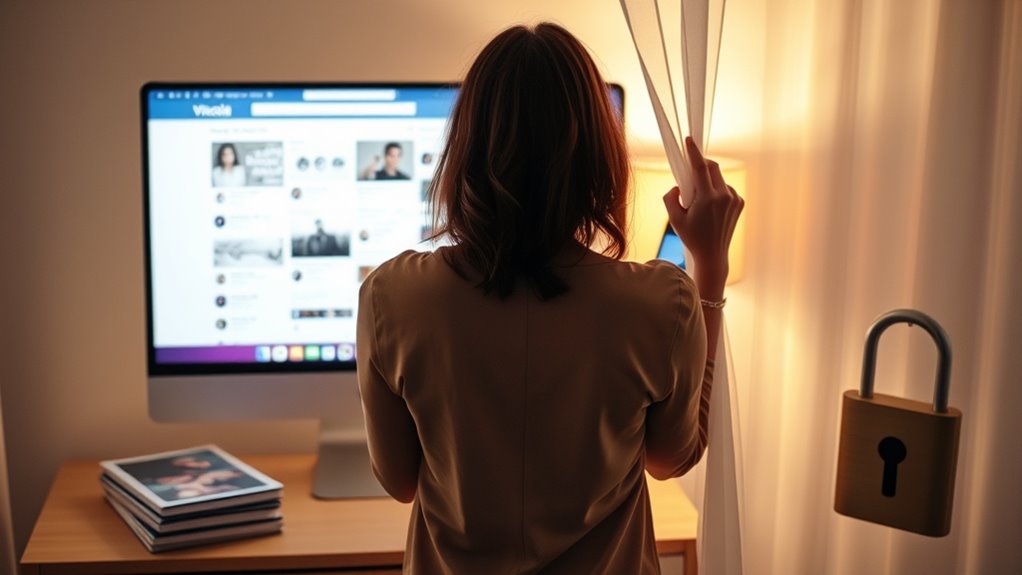
After a divorce, managing your social media and privacy settings becomes vital to protect your personal life and maintain boundaries. It’s a key step to regain control over your digital presence and prevent unintentional oversharing. Setting clear digital boundaries helps you decide what you’re comfortable sharing and who can see it. This might mean limiting access to certain posts or creating separate accounts to keep your personal life private. Your privacy settings are your first line of defense—they allow you to control who can view your profile, posts, and personal information. Take time to review and update these settings on each platform to restrict visibility, especially for sensitive content.
You should consider removing your ex from your social media connections if possible. Blocking or unfollowing them ensures you’re not exposed to their updates and reduces the chance of accidental contact. Be cautious about tagging or mentioning your ex or shared interests that could reveal too much. It’s also wise to reconsider the privacy of past posts. Delete or archive anything that might be used against you or that no longer aligns with your current boundaries. Remember, what you share online can linger indefinitely, so it’s best to err on the side of caution.
Adjust your privacy settings to prevent unwanted interactions. Many social media platforms offer options to restrict who can comment, send messages, or view your stories. Use these features to create a safe space for yourself. Consider setting your profiles to private, especially if you’re concerned about former partners, friends, or acquaintances seeing your updates. This way, you control who gets access to your content and can approve new followers selectively.
It’s also smart to be mindful of your online activity. Think twice before posting about your divorce or personal struggles; even seemingly innocuous comments can be misinterpreted or used against you. Avoid sharing details that might compromise your safety or emotional well-being. Regularly review your privacy settings, as platforms often update their policies and features. Staying informed helps you adapt and keep your digital boundaries intact.
Managing your social media post-divorce isn’t just about hiding or restricting content—it’s about creating a space where you feel safe and in control. By actively adjusting your privacy settings and establishing clear digital boundaries, you protect your personal life and foster a healthier relationship with your online presence. This proactive approach helps you move forward with confidence, knowing your digital footprint reflects your new boundaries and priorities. Additionally, understanding the benefits of privacy controls can empower you to make informed decisions about your online safety.
Frequently Asked Questions
Can I Legally Delete My Ex-Spouse’s Access to Shared Social Media Accounts?
Yes, you can legally delete your ex-spouse’s access to shared social media accounts. To guarantee social media privacy, change account passwords and remove their access through account settings. If you have sole ownership, you’re generally entitled to control who can access your accounts. However, avoid tampering with accounts you don’t own, as that could lead to legal issues. Taking these steps helps secure your privacy after divorce.
How Do I Handle Mutual Friends Who Share Updates About My Ex Online?
You should set clear mutual friend boundaries by politely asking them to refrain from sharing updates about your ex online. If they continue, consider unfollowing or blocking them to reduce exposure. Communicate your need for privacy directly, emphasizing that online update sharing impacts your well-being. Remember, you can’t control others’ actions, but establishing boundaries helps protect your digital space and emotional health after a divorce.
Are There Legal Consequences for Spying on My Ex’s Social Media?
Spying on your ex’s social media could land you in serious legal hot water, with potential privacy violations and accusations of online harassment. It’s like stepping into a legal minefield that might blow up in your face, causing costly lawsuits and emotional turmoil. Instead, focus on protecting your privacy and moving forward—no good comes from invading their online space. Respect boundaries, or risk facing legal consequences that could follow you forever.
What Steps Should I Take if My Ex Posts Harmful Content About Me?
If your ex posts harmful content about you, you should document the posts and report them to the platform for violating community guidelines. Consider consulting a lawyer to protect your online reputation and explore privacy protection options. You might also want to request the content be removed through legal channels if necessary. Taking these steps helps safeguard your privacy and limits the impact of harmful online behavior.
How Can I Prevent My Children From Accessing My Private Social Media Profiles?
Imagine installing a high-tech fortress around your social media kingdom, complete with digital alarms. To protect your children’s privacy and set social media boundaries, you can make profiles private, use strong passwords, and enable parental controls. Sharing login info is a no-go. Regularly review your privacy settings and educate your kids on online safety. This way, your virtual castle stays secure, and their digital innocence remains intact.
Conclusion
After your divorce, managing social media and privacy feels like steering a delicate balance—you never know when a comment or photo might unexpectedly reveal more than intended. Just as the seasons change, so do your boundaries and connections, often influenced by unforeseen moments. Staying cautious and intentional keeps your digital life secure, reminding you that sometimes, the smallest adjustments can prevent larger surprises. Ultimately, your online space becomes a reflection of your new beginning, shaped by careful choices and quiet coincidences.