

If your child blames you for the divorce, stay calm and listen carefully without becoming defensive. Acknowledge their feelings by validating their pain and reassure them that it’s okay to feel upset. Maintain open communication, showing empathy and patience, and create a stable environment to help them feel safe. Remember, reactions are often temporary; your consistent support can help them heal. Keep going, as there’s more to understand about supporting your child through this.

Get gifts for the two of you delivered free with Prime
- Fast, free delivery on millions of items
- Prime Video, Amazon Music and more included
- Member-only deals all year
Key Takeaways
- Validate their feelings without becoming defensive, showing empathy and understanding.
- Maintain open, honest communication to help them process emotions safely.
- Reassure your child that they are not to blame and that both parents love them.
- Keep a stable environment and offer consistent support to foster trust and security.
- Be patient, giving your child time to heal and encouraging ongoing conversations about their feelings.
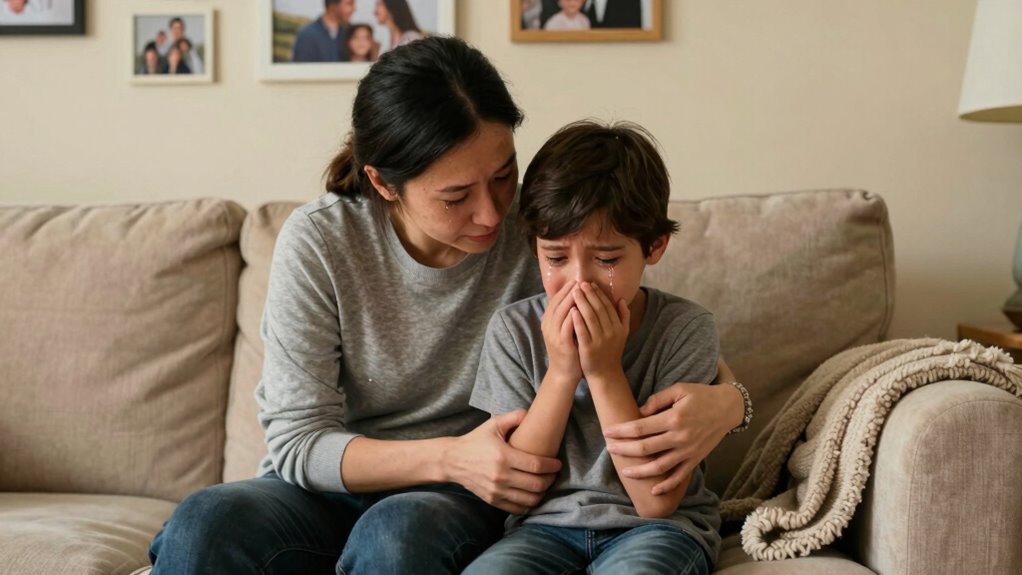
When your child blames you for the divorce, it can feel like a personal attack, but it’s important to remember that their feelings are normal and often driven by confusion or hurt. Children, especially during such a turbulent time, may struggle to understand what’s happening and might direct their anger or sadness toward the parent they feel most connected to or safest with. This is a natural response, but it can be painful to hear. Your goal now is to focus on maintaining open parent-child communication, which helps your child process their emotions and reduces feelings of blame. Instead of dismissing their feelings, listen carefully and acknowledge their pain without becoming defensive. Let them know that it’s okay to feel upset and that you’re there for them, which reassures them that their emotions are valid and that they’re not alone.
Building trust in these moments is vital. Use emotional support strategies that emphasize empathy and patience. Offer reassurance by regularly expressing your love and care, regardless of the blame. Keep your tone calm and steady, avoiding arguments or guilt-tripping, which can escalate their feelings of guilt or resentment. When your child feels heard and understood, they’re more likely to open up and share their concerns honestly. You might say, “I know you’re feeling upset and confused right now, and I’m here to listen and support you.” This kind of response fosters a safe environment where your child feels comfortable expressing their emotions without fear of judgment. Recognizing that emotional responses to divorce are often temporary can also help you provide reassurance and patience. It’s also helpful to remember that providing a stable environment can significantly ease their emotional distress and help them feel more secure.
Remember, their reactions are often temporary, and with continued support, they can gradually adapt to the change. It’s also helpful to create opportunities for your child to talk about their feelings over time, not just in one sitting. Consistent emotional support strategies, like regular check-ins or guided conversations, help your child develop a clearer understanding of the situation. Remember that their blame isn’t necessarily about you personally but about their own struggle to cope with change. Be patient and avoid pressuring them to “get over it.” Instead, give them space to process at their own pace while remaining available for support. Over time, these efforts can help diminish their feelings of blame and foster healthier communication.
Ultimately, your consistent, compassionate approach can help your child heal and rebuild trust, making it easier for both of you to navigate this challenging period.
Popular right now

KitchenAid Classic Series 4.5-Quart Tilt-Head Stand Mixer, Onyx Black

Philips 4400 Series Fully Automatic Espresso Machine with LatteGo Milk System

Shark AI Ultra Robot Vacuum with Self-Empty Base
As an affiliate, we earn on qualifying purchases.
Frequently Asked Questions
How Can I Tell if My Child’s Blame Is Emotionally Harmful?
You can tell if your child’s blame is emotionally harmful by noticing signs like persistent sadness, withdrawal, or anger. Their blame perception might lead to feelings of guilt or low self-esteem, which can impact their emotional well-being. If they seem overwhelmed or their emotional impact seems excessive, it’s a sign that their blame may be hurting them. Address these feelings with compassion and consider seeking professional support to help them process their emotions.
Should I Involve a Counselor Immediately After Blame Issues Arise?
Think of parent-child communication like a delicate bridge; when blame surfaces, it can weaken the structure. You should involve a counselor immediately to help your child build emotional resilience and repair that bridge. Early intervention offers a safe space for your child to express feelings and prevents long-term emotional harm. Addressing blame promptly promotes healthier understanding and strengthens your relationship during this challenging time.
How Do I Address Blame From an Older or Teenage Child?
You should use effective parenting strategies and communication techniques to address blame from your teenage child. Listen actively and validate their feelings without becoming defensive. Encourage open conversations, emphasizing that both parents are responsible for the divorce, not just you. Maintaining honesty and patience helps rebuild trust. Show empathy, stay consistent, and avoid assigning blame yourself. Your calm, supportive approach fosters understanding and helps your teen process their emotions constructively.
Can Divorce Blame Affect My Child’s Future Relationships?
Divorce blame can cast long shadows over your child’s future relationships, like a dark cloud that lingers. Parental guilt and child resentment might make them distrust partners or struggle with intimacy. If unresolved, these feelings can turn into barriers, affecting their ability to form healthy bonds. Addressing blame openly and compassionately helps break this cycle, fostering trust and emotional resilience, so your child learns that love can still flourish beyond heartbreak.
What Signs Indicate My Child Is Struggling to Cope?
You can tell your child is struggling to cope when you notice changes in parent-child communication, such as withdrawal or difficulty expressing feelings. They might also show decreased emotional resilience, becoming easily upset or overwhelmed. Keep an eye out for sleep disturbances, loss of interest in activities, or behavioral changes. Address these signs with patience and open dialogue, helping your child build emotional resilience and feel supported during this challenging time.
Conclusion
Think of yourself as the gardener tending a fragile plant. When your child blames you, it’s like a storm threatening to uproot it. But with patience and love, you can nurture the roots, helping them grow stronger despite the storm. Remember, you’re not the storm—you’re the steady sunshine guiding them toward healing. With time and understanding, your child will see that your love is the shelter they need to thrive once again.