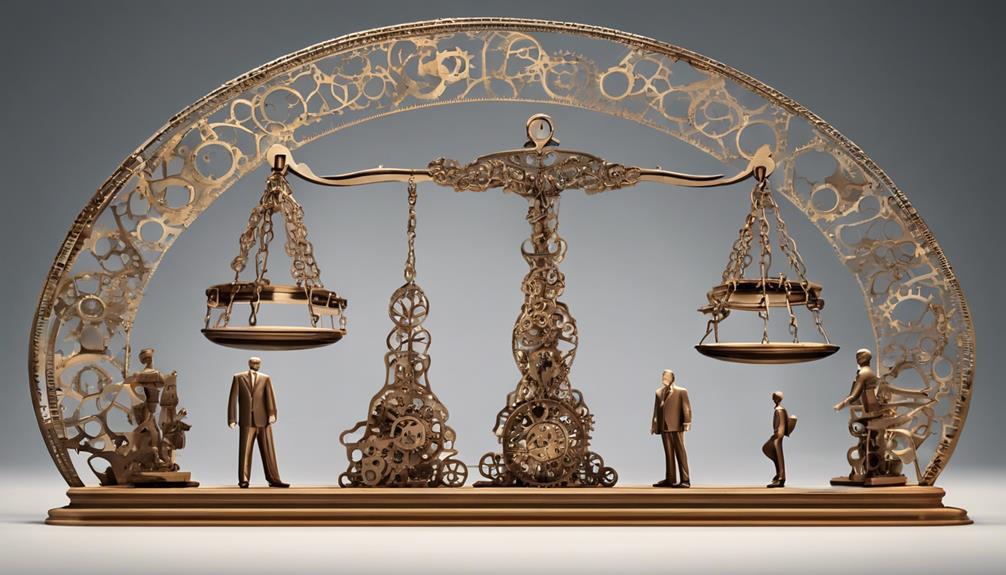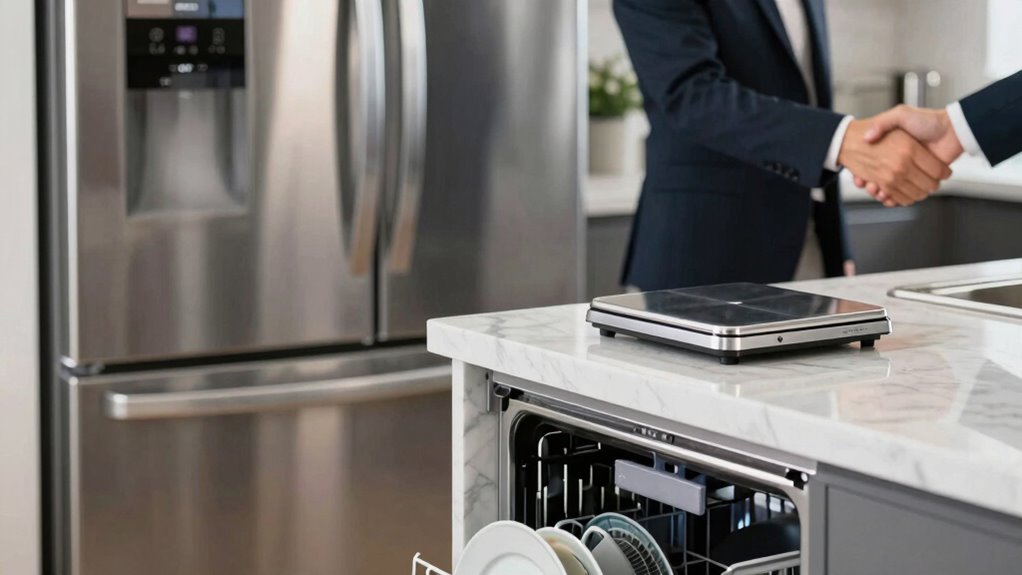

When dividing household appliances in divorce, you should assess each item’s value, emotional significance, and practical use. Use fair market estimates to support your decisions and consider who uses the appliances most or has space for them. Be honest about sentimental attachments and energy efficiency. Clear communication helps avoid misunderstandings and guarantees both sides feel the division is equitable. To learn how to navigate these choices smoothly, keep exploring the key strategies involved in fair appliance division.

Get gifts for the two of you delivered free — and shop member deals
- Fast, free delivery on millions of items
- Access to Prime Big Deal Days deals on October 6–7
- Prime Video, Amazon Music and more included
Key Takeaways
- Assess the fair market value of each appliance to support equitable division during divorce negotiations.
- Consider emotional attachment and practical usage when deciding who keeps which appliances.
- Use valuation data and open communication to facilitate transparent and fair negotiations.
- Account for energy efficiency and environmental impact as part of appliance selection and division.
- Ensure both parties agree on the division to prevent future disputes and promote a respectful settlement.
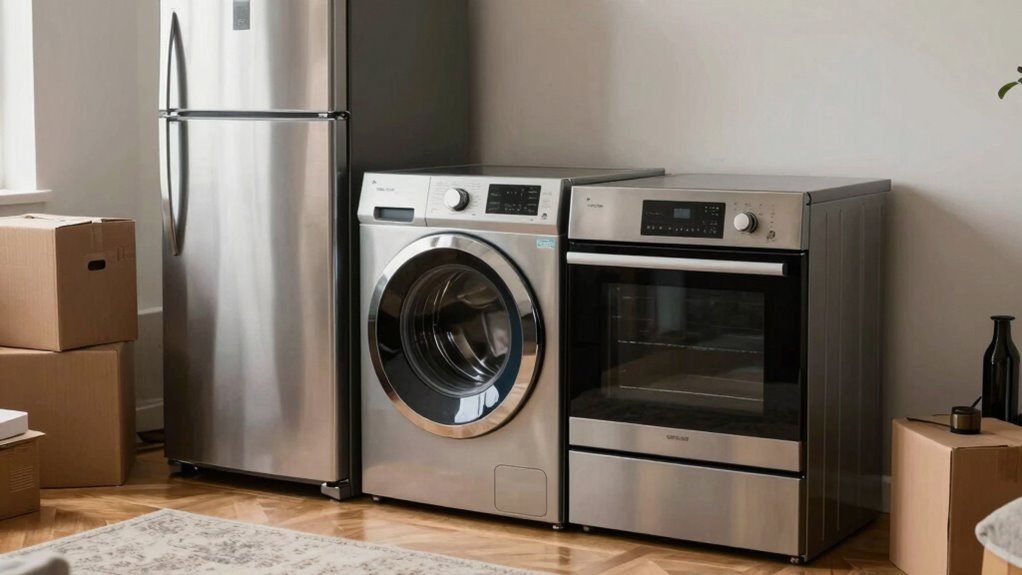
When approaching the division, start by listing all appliances and assigning approximate values based on appliance valuation. This can involve researching current prices for similar models or consulting professionals if needed. Once you have a clear picture of each item’s worth, you can negotiate more effectively. Remember, the goal isn’t just to split things evenly but to reach a fair agreement that considers both monetary value and emotional significance. Sometimes, you may agree to keep an appliance because of sentimental attachment, while accepting a different item in exchange. This allows you to balance financial fairness with emotional comfort.
It’s also helpful to *deliberate* practical factors beyond valuation and sentiment. For example, who uses which appliances more frequently, or who has space for larger items? Sometimes, division isn’t purely financial; it’s about convenience and daily life. If an appliance holds sentimental value but isn’t practical to keep, you might agree to allow your ex-partner to keep it as a gesture of goodwill. Conversely, if an appliance is worth more to you emotionally, it’s worth advocating for its retention during negotiations. Additionally, understanding electric power generation can inform decisions if you are considering appliances that contribute to energy efficiency or sustainability. Considering energy efficiency can also influence which appliances are more desirable to retain or exchange. Recognizing the importance of energy consumption can help in making environmentally conscious choices during division. Ultimately, open communication and transparency about appliance valuation and sentimental attachments can smooth the process and prevent future disagreements.
In the end, dividing household appliances in divorce requires a balance of fair valuation, understanding emotional attachments, and practical considerations. By approaching the process with clarity and honesty, you can make decisions that respect both the monetary and emotional value of these items. This approach helps *guarantee* that the division feels equitable and that both parties can move forward without lingering resentment over appliances. Remember, while appliances are tangible possessions, their significance often goes beyond price, making thoughtful negotiation key to a fair settlement.
household appliance valuation tools
As an affiliate, we earn on qualifying purchases.
As an affiliate, we earn on qualifying purchases.
Frequently Asked Questions
How Is the Value of Household Appliances Determined for Division?
You determine the value of household appliances through appraisal methods that assess their current market value. An appraiser or evaluator considers factors like age, condition, brand, and current demand. You can also research similar items online or in stores to gauge their market value. This helps guarantee a fair division, as both parties agree on a realistic appraisal that reflects what the appliances are worth today.
Can I Keep Appliances I Bought Before Marriage?
Yes, you can typically keep appliances you bought before marriage, as they’re considered pre-marriage assets. Appliance ownership usually remains with the person who purchased them unless you can prove joint ownership or that they were commingled with marital assets. It’s important to gather receipts or proof of purchase to establish your ownership. During divorce, courts often respect pre-marriage assets, but each case varies depending on circumstances.
What if Appliances Are Damaged or Broken During Divorce?
If appliances are damaged or broken during divorce, you should start with an appliance repair assessment to determine the extent of the damage. Document the damage thoroughly with photos and notes. Reach out to a professional for a damage assessment, which can help decide whether repairs are cost-effective or if replacement is necessary. This information can influence how the appliances are divided or valued in the divorce settlement.
Are Warranties and Service Agreements Divided Along With Appliances?
Ever wondered if warranties and service agreements transfer with your appliances? Generally, warranty transfer and service agreement transfer depend on the terms set by manufacturers or service providers. Some warranties are non-transferable, but many allow you to update the documentation during the divorce process. It’s essential to review these agreements early and coordinate with providers to guarantee a smooth transfer, so you’re protected and can enjoy ongoing support for your appliances.
How Do Joint Ownership and Individual Ownership Affect Appliance Division?
Joint ownership means both of you share equal rights to the appliances, often leading to shared responsibilities for appliance customization and replacement. If you own appliances individually, you get to decide how they’re divided, which often simplifies the process. Understanding whether appliances are jointly or individually owned helps determine fair division, especially when considering future appliance replacement or upgrades, ensuring both parties’ interests are protected during the divorce settlement.
Conclusion
When dividing household appliances in divorce, remember that clear communication and legal guidance can make the process smoother. Keep in mind that roughly 60% of couples face disputes over shared property, so understanding your rights is essential. By staying informed and working collaboratively, you can navigate the division more confidently. Ultimately, focusing on fair solutions helps both parties move forward with less stress and more peace of mind.
Halloween Picks
halloween
As an affiliate, we earn on qualifying purchases.