This guide helps couples choose a relationship counseling book, agree on how to use it, and turn its ideas into practical conversations and small changes at home. It is for people who want a structured self-help resource and can discuss the relationship safely and respectfully. No counseling experience is needed. Allow about 1–2 hours to choose a book and begin; working through a book usually takes several weeks.

Get gifts for the two of you delivered free with Prime
- Fast, free delivery on millions of items
- Prime Video, Amazon Music and more included
- Member-only deals all year

The Seven Principles for Making Marriage Work: A Practical Guide from the Country’s Foremost Relationship Expert
- ✔ Author: John Gottman
- ✔ Format: Practical guide
- ✔ Primary subject: Marriage and relationship improvement

Reconnect: A Marriage Counseling Workbook
- ✔ Format: Workbook
- ✔ Subject: Marriage counseling and relationships
- ✔ Primary activity: Guided conversations
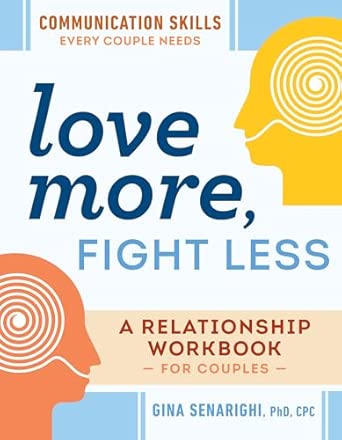
Love More, Fight Less: Communication Skills Every Couple Needs
- ✔ Format: Relationship workbook
- ✔ Primary subject: Communication skills for couples
- ✔ Stated audience: Couples
Difficulty: Beginner | Time: 1–2 hours to choose a book and start; several weeks to work through it
What You’ll Need
Tools & Materials:
- Access to a library, bookstore, or bookseller with sample pages and publication details
- A notebook or shared document for questions and agreed actions
- A calendar or regular time slot for reading and discussion
Knowledge:
- A general idea of the relationship issue you want to address
- Willingness to listen, take turns, and pause a conversation when either person feels overwhelmed
Choose a time when neither of you is rushed, tired, or already upset. A book can support reflection and communication, but it does not replace a licensed mental health professional. If there is fear, coercion, violence, or concern about personal safety, do not use joint reading as a substitute for confidential support; contact a qualified local service or professional.
The Seven Principles for Making Marriage Work: A Practical Guide from the Country’s Foremost Relationship Expert
For couples who want a relationship counseling book with a clear organizing idea, The Seven Principles for Making Marriage Work is the strongest starting point in this group. John Gottman’s guide presents seven principles for improving and maintaining a marriage, giving readers a broader frame than a book centered on one skill. That makes it a useful choice when we want to consider the relationship as a whole rather than begin with communication alone.Compared with Reconnect, this pick is described as a practical guide rather than a workbook built around exercises and guided conversations. Readers who learn best by doing may prefer Reconnect’s more explicit activity-based format. Compared with Love More, Fight Less, Gottman’s book has a wider stated scope, but that breadth may feel less targeted if communication is the only issue we want to address. Its main limitation is that the description does not specify how much of the guidance is intended for joint practice, so couples wanting a highly prompted session-by-session experience may want a workbook instead.We rank it first because the combination of a defined framework and practical marriage guidance offers the broadest fit for readers exploring relationship counseling books. It is still a self-guided resource, not personalized counseling, and couples should expect to discuss and apply the principles rather than treat reading alone as the work.
Pros:
- Organizes guidance around seven stated principles
- Aims to help couples build and maintain a strong marriage
- Offers a broader relationship focus than a communication-only guide
Cons:
- Not described as an exercise-led workbook
- The supplied description does not specify a step-by-step session structure
- Its broad marriage focus may be less targeted for a single communication concern
Best for: Couples seeking a broad, principle-based guide to strengthening and maintaining a marriage.
Not ideal for: Readers who want a workbook with clearly described prompts and exercises, or who need advice focused only on communication.
Bottom line: We recommend it as the most versatile starting point for couples who want a structured framework for working on their marriage.
“We recommend it as the most versatile starting point for couples who want a structured framework for working on their marriage.”
Reconnect: A Marriage Counseling Workbook
Reconnect: A Marriage Counseling Workbook is the most hands-on choice here. Its described format pairs guided conversations with relationship exercises, which gives couples a clearer way to move from reading about a concern to discussing it together. For readers who find open-ended discussions difficult to start, that structure can make the first step more manageable.Its workbook format sets it apart from The Seven Principles for Making Marriage Work, which offers a seven-principle framework but is not described as an activity book. Reconnect may therefore suit couples who want prompts and shared practice more than a broad explanatory guide. Against Love More, Fight Less, it also appears wider in scope: its stated aim is building a long-lasting relationship, while Love More, Fight Less is specifically described as focused on communication skills. The tradeoff is that a workbook asks both partners to participate; it may be a poor fit if one person is not ready to engage or if we would rather read and reflect independently.We give it the guided-exercise role because those features are explicit in the available description. The exact sequence and depth of the activities are not specified, so we should not assume a particular counseling method or a complete treatment plan. Still, for couples ready to work through structured conversations and relationship exercises, it is the clearest practice-oriented option in this lineup.
Pros:
- Includes guided conversations for couples
- Provides relationship exercises
- Focuses on building a long-lasting relationship
Cons:
- Requires both partners to participate for the exercises to be useful
- The available description does not detail the exercise sequence or method
- May offer less broad explanatory framing than a principle-led guide
Best for: Couples who want prompts and exercises to organize conversations and work on their relationship together.
Not ideal for: Readers who prefer a theory-led guide, want to work independently, or are looking for individualized counseling.
Bottom line: We would choose Reconnect when shared prompts and practical exercises matter more than a broad, principle-based overview.
“We would choose Reconnect when shared prompts and practical exercises matter more than a broad, principle-based overview.”
Love More, Fight Less: Communication Skills Every Couple Needs
When the issue we want to work on is how we talk and handle disagreements, Love More, Fight Less has the most specific stated focus in this comparison: communication skills for couples. That narrower promise can help readers choose a starting point when a general marriage guide feels too broad. It is described as a relationship workbook, so its intended orientation is practical, although the supplied information does not describe particular exercises or prompts.Compared with Reconnect, this book names communication as its central subject, whereas Reconnect is described more generally around marriage counseling, guided conversations, and relationship exercises. That distinction makes Love More, Fight Less the more targeted pick, but leaves us with less evidence about what the workbook actually asks couples to do. The Seven Principles for Making Marriage Work offers a wider marriage framework; choose that one if we want broad guidance rather than a communication-specific angle.The information available is limited, so we rank this third for readers who can identify communication as their priority, while being cautious about claims beyond the stated focus. We cannot confirm the structure, methods, or scope of the exercises from the supplied description. Couples dealing with issues beyond communication may find its focus too narrow, and those who need concrete, clearly described activities may prefer Reconnect.
Pros:
- Directly focuses on communication skills for couples
- Workbook format suggests a practical orientation
- Offers a more targeted angle than a broad marriage guide
Cons:
- The available description provides few details about its contents
- Specific exercises and conversation prompts are not confirmed
- Its communication focus may not address other relationship concerns
Best for: Couples who want a workbook centered on communication skills and navigating conflict.
Not ideal for: Readers seeking a broad marriage framework or a workbook whose specific exercises and structure are clearly documented.
Bottom line: We would shortlist it when communication is our main goal, while choosing Reconnect for more clearly described guided activities.
“We would shortlist it when communication is our main goal, while choosing Reconnect for more clearly described guided activities.”
As an Amazon Associate we earn from qualifying purchases.
Before You Start
Agree that the goal is to understand one another and try useful skills, not to prove who is right. Each partner should be free to skip an exercise or stop a discussion. When you compare books, check that the advice is relevant to your situation and that the exercises feel respectful and manageable. Avoid treating a book as a diagnosis or using its language to label your partner.
Step-by-Step Instructions
Step 1: Name the issue you want to work on
Write down one or two recurring situations you each want to handle better, such as disagreements about chores, feeling disconnected, or difficulty repairing after arguments. Describe observable behavior and its effect: for example, “We stop talking after disagreements,” rather than “You never care.” Compare your lists and select one shared starting point. If your concerns differ, choose a broad goal you both accept, such as listening more carefully.
Tip:Keep the first goal narrow. A specific issue makes it easier to judge whether a book and its exercises are useful.
Check: You can both state the chosen goal in one sentence without assigning blame.
Step 2: Set limits for what a book can do
Decide together to use the book as a source of ideas, not as a verdict on either partner. Agree to speak from your own experience, ask before interpreting the other person’s behavior, and pause if the discussion becomes heated. Choose a signal or phrase, such as “Let’s take a break,” and agree when you will return to the topic.
Tip:If either partner feels unsafe speaking openly, or there is intimidation or violence, seek confidential professional or local safety support instead of starting joint exercises.
Check: You have a shared pause rule and both partners agree that participation is voluntary.
Step 3: Compare books against your goal
Search library or bookstore catalogs for relationship communication, conflict repair, intimacy, or the specific topic you selected. Read the description, table of contents, and a sample chapter. Check who wrote the book, what experience or qualifications they describe, when it was published, and whether it offers exercises you can actually complete. Compare at least two options before choosing.
Tip:Look for concrete practices and clear limits on the advice. Be cautious of books that promise to fix every relationship or frame one partner as the sole cause of problems.
Check: You can explain how the book addresses your chosen issue and identify one exercise or chapter you want to try.
Step 4: Choose a format and reading pace
Select print, ebook, or audiobook based on what both partners can access and use comfortably. Check that worksheets, diagrams, or exercises are available in your chosen format. Set a modest pace, such as one chapter each week, and schedule a 30–45 minute discussion after reading. If you prefer, read a section aloud together instead of assigning separate reading.
Tip:Do not set a pace that turns the book into homework or a test. Leave time to try one practice between discussions.
Check: You have a format, a first reading date, and a scheduled time to talk.
Step 5: Agree on a simple discussion structure
Decide how to take turns before your first discussion. Have one partner share what stood out for a few minutes while the other listens without interrupting, then switch. Ask each person to name one idea they found useful, one question, and one point they want to discuss. Ask clarifying questions before responding, and keep the focus on your own reactions rather than diagnosing your partner.
Tip:Keep the conversation to one chapter or topic. Trying to resolve several long-running conflicts at once can make the exercise harder to use.
Check: Both partners have spoken, been heard, and had a chance to ask a question without being pressured to agree.
Step 6: Try one practice in daily life
Choose one small, specific exercise from the book and agree when you will use it. For example, take turns summarizing what the other person said before offering a response, or set aside ten minutes for an uninterrupted check-in. State the action, who will begin, and how often you will try it. Keep the practice brief enough to repeat on an ordinary day.
Tip:Change one habit at a time. If a practice feels artificial, adapt it together or try another exercise rather than forcing it.
Check: You have a clear practice, a start date, and a shared understanding of what trying it means.
Step 7: Review and decide what comes next
Discuss what happened after you have tried the practice for one or two weeks. Ask each partner to name one change they noticed, one difficulty, and one adjustment to try. Decide whether to continue, adapt, or set the exercise aside. If the same conflict remains intense, the book increases blame, or you cannot talk safely, contact a licensed couples therapist or another suitable professional for guidance.
Tip:Progress can mean a calmer pause or a quicker repair after conflict; it does not require eliminating every disagreement.
Check: You have decided on a realistic next practice, a revised plan, or a specific form of outside support.
Common Mistakes to Avoid
- Choosing a popular book without checking whether it addresses your actual concern. — Compare the table of contents and sample pages against the issue you named before buying or borrowing it.
- Using the author’s advice to prove that a partner is wrong or defective. — Describe your own feelings and behavior, and ask how the other person understands the situation.
- Trying too many exercises or reading at an unrealistic pace. — Choose one small practice and agree on a schedule that fits your week.
- Continuing a discussion after one person feels overwhelmed or unsafe. — Use the agreed pause rule. Resume only when both people are willing; seek professional or confidential support when needed.
Troubleshooting
Problem: One partner does not want to read the book.
Solution: Ask what makes participation difficult and offer options: read a short excerpt together, listen to one section, or discuss a single exercise. Do not make access to the relationship conditional on completing the book. If you cannot agree on a format, consider a therapist who can help you choose a shared starting point.
Problem: The exercises lead to arguments instead of useful discussion.
Solution: Stop the exercise and take the break you agreed on. Later, identify the moment things escalated and choose a simpler prompt or shorter discussion. If this pattern repeats or either person feels unsafe, pause the book and seek qualified support.
Problem: The book’s advice does not fit your situation.
Solution: Skip the mismatched exercise and review another chapter or book that better fits your goal. Do not force advice that conflicts with your circumstances, values, or safety.
Problem: You finish chapters but see no change.
Solution: Check whether you have tried a specific practice consistently, rather than only reading and discussing. Choose one observable behavior to track for a week. If problems remain persistent or serious, ask a licensed professional for an assessment and tailored guidance.
What Success Looks Like
You have chosen a book that matches a shared relationship goal, agreed on a manageable reading and discussion routine, and tried at least one specific practice. Both partners can describe what they learned and decide whether to continue, adjust the plan, or seek outside support. Success means having a clear next step; it does not mean that a book has resolved every relationship problem.
Next Steps
Schedule another short check-in after one or two weeks. Keep practices that feel useful, adapt those that do not, and choose the next chapter based on the goal you set. If discussions repeatedly become hostile, stalled, or unsafe, stop the joint exercise and contact a qualified professional or local support service. You can return to the book later if both partners want to continue.
Frequently Asked Questions
Should we read the relationship book separately or together?
Use whichever format both partners will follow. Separate reading allows private reflection; reading together can help when schedules or motivation differ. Agree on a short discussion time either way.
How do we choose a book if our main concern is different?
Start with an issue you both recognize, such as listening during disagreements or rebuilding connection. If you cannot name a shared goal, consider asking a couples therapist to help set one.
What if my partner refuses to do the exercises?
Do not force participation. Ask whether a shorter reading, a different format, or a single conversation feels acceptable. If your partner remains unwilling, a book cannot create mutual participation; you can seek individual professional guidance about your options.
Can a counseling book replace couples therapy?
A book may help with reflection and basic communication practices, but it cannot assess your relationship or provide tailored care. Seek a licensed professional when problems persist, cause significant distress, or feel unsafe to address alone.
How long should we work through one book?
Set a pace that leaves room to practice between chapters. One chapter each week is a workable starting point, but pause or slow down if the reading becomes stressful or difficult to fit into your lives.