

Readers comparing Hold Me Tight by Sue Johnson with The Seven Principles for Making Marriage Work by John Gottman and Nan Silver are usually deciding what kind of help they need: a guided way to address emotional distance, or a practical program for strengthening the daily habits of a marriage. Both books draw on established couples therapy approaches, but they organize the work differently. Johnson centers emotional safety and recurring attachment patterns; Gottman and Silver emphasize friendship, conflict management, shared meaning, and concrete practices. Choose Hold Me Tight when the central problem is feeling disconnected or caught in painful cycles. Choose The Seven Principles when you want a wider relationship tune-up with exercises you can apply to everyday disagreements and routines.

Get gifts for the two of you delivered free with Prime
- Fast, free delivery on millions of items
- Prime Video, Amazon Music and more included
- Member-only deals all year

The Seven Principles for Making Marriage Work: A Practical Guide from the Country’s Foremost Relationship Expert
- ✔ Author: John Gottman
- ✔ Subject: Marriage and relationships
- ✔ Stated format: Practical guide

Reconnect: A Marriage Counseling Workbook
- ✔ Format: Workbook
- ✔ Subject: Marriage counseling and relationships
- ✔ Stated activities: Guided conversations and relationship exercises
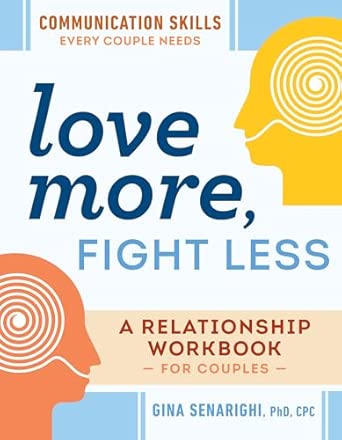
Love More, Fight Less: Communication Skills Every Couple Needs
- ✔ Format: Relationship workbook
- ✔ Intended audience: Couples
- ✔ Stated focus: Communication skills
At a Glance
| Criteria | Hold Me Tight by Sue Johnson | The Seven Principles for Making Marriage Work by John Gottman and Nan Silver | Winner |
|---|---|---|---|
| Core approach | Emotion-focused therapy; explores attachment needs and recurring conflict cycles | Gottman research translated into relationship principles and habits | Depends |
| Best fit for the relationship problem | Couples feeling emotionally distant, insecure, or stuck in the same painful arguments | Couples seeking to improve communication, friendship, conflict, and shared life | A |
| Exercises and practical use | Guided conversations designed to help partners discuss key emotional moments | Concrete questionnaires, examples, and exercises for partners to try | B |
| Reading experience | Focused, emotionally reflective, and sometimes intense | Structured and practical, with a broad self-help feel | B |
| Range of topics | Concentrates on emotional bonds, conflict cycles, and rebuilding connection | Covers several areas of marital life, from fondness to shared meaning | B |
| Value | Often the stronger fit when emotional disconnection is the main issue | Often the stronger all-around value for couples wanting a broad toolkit | Depends |
The Seven Principles for Making Marriage Work: A Practical Guide from the Country’s Foremost Relationship Expert
For couples who want more than a narrow communication workbook, The Seven Principles for Making Marriage Work is the most complete starting point in this lineup based on the available description. John Gottman’s book organizes its advice around seven principles and is presented as a practical guide to building and maintaining a strong marriage. That structure gives us a framework to return to, rather than limiting the book’s stated purpose to one skill area. Compared with Love More, Fight Less, its scope is described more clearly; compared with Reconnect, it sounds less centered on completing guided exercises together.That breadth is also its main limitation. Couples looking for a workbook they can open and follow through prompt by prompt may find Reconnect a more direct fit. And although the description calls this practical, it does not specify individual exercises, session plans, or how the principles are presented, so we should not assume a particular format. This pick makes the most sense when we want an organized marriage guide and are comfortable applying its ideas ourselves. Couples who need a tightly facilitated conversation sequence or a narrowly focused communication resource may prefer one of the other titles.
Pros:
- Organizes guidance around seven principles
- Aims to help couples build and maintain a strong marriage
- Offers a broader stated scope than the communication-focused title
- Identifies John Gottman as its author
Cons:
- The supplied description does not detail specific exercises or how to use the principles
- Less explicitly workbook-oriented than Reconnect
- May feel too broad for couples seeking help with one defined communication skill
Best for: Couples seeking a broad, practical marriage guide with an organizing framework of seven principles.
Not ideal for: Readers who specifically want workbook prompts and structured exercises, or a book focused only on communication skills.
Bottom line: We recommend it as the best overall starting point when a couple wants a broad marriage framework and can put practical advice into action without a workbook structure.
“We recommend it as the best overall starting point when a couple wants a broad marriage framework and can put practical advice into action without a workbook structure.”
Reconnect: A Marriage Counseling Workbook
Reconnect is the clearest choice for couples who want to sit down and work through material together. Its description identifies it as a marriage counseling workbook and specifically mentions guided conversations and relationship exercises. Those details matter: partners who struggle to turn general advice into a useful discussion may value a resource that signals active participation from the start. Against The Seven Principles for Making Marriage Work, Reconnect is the more explicitly hands-on option; the latter offers a wider principle-led framework, but its supplied description does not promise the same exercise-based format.Its focused format may not suit every reader. A workbook asks us to engage with prompts and complete exercises rather than simply read through a broad guide. Couples wanting a wider-ranging framework may find the seven-principle approach more appealing, while those interested only in communication skills might look to Love More, Fight Less. The information provided does not describe the exercise sequence, intended pace, or particular topics covered, so we should not assume how much structure the book offers beyond guided conversations and exercises. Reconnect stands out for its clear activity-based intent, but buyers who prefer to read independently or want detailed advance information about the content may want a different fit.
Pros:
- Explicitly designed as a marriage counseling workbook
- Includes guided conversations
- Provides relationship exercises
- States a focus on building a long-lasting relationship
Cons:
- The supplied details do not explain the exercise sequence or topics
- Its workbook format may not suit couples who prefer reading without prompts
- Has a narrower stated format than the broad seven-principle guide
Best for: Partners who want a workbook format with guided conversations and relationship exercises to complete together.
Not ideal for: Readers who prefer a broad advice-led guide, want to read independently without completing activities, or need a communication-only focus.
Bottom line: We recommend Reconnect for couples who are most likely to benefit from having conversations and exercises built into their relationship work.
“We recommend Reconnect for couples who are most likely to benefit from having conversations and exercises built into their relationship work.”
Love More, Fight Less: Communication Skills Every Couple Needs
When our main goal is to focus on how partners communicate, Love More, Fight Less has the most direct title in this group. The supplied description calls it a relationship workbook for couples focused on communication skills, making it a plausible fit for readers who want to narrow their attention to that area rather than start with a broad marriage framework. In that respect it differs from The Seven Principles for Making Marriage Work, which is described as a guide organized around seven principles, and Reconnect, whose clearest distinction is guided conversations and exercises.We have less to go on here than with the other two books. The provided product details do not name specific exercises, methods, author credentials, or topics within communication, so we cannot tell whether the book offers structured practice comparable to Reconnect or a broader discussion of communication skills. That makes it harder to judge how it will work in a couple’s routine. It is best approached as a subject-led option for readers who already know communication is their priority and are comfortable with limited advance detail. Couples seeking a well-defined framework or clearly described activities will find more concrete signals in the other entries.
Pros:
- States a direct focus on communication skills
- Identifies couples as its intended audience
- Workbook positioning suggests an activity-oriented resource
- Offers a more targeted subject than the broad seven-principle guide
Cons:
- The supplied details do not describe its exercises or approach
- Author and further content information are not provided
- Its scope and practical structure are harder to compare with Reconnect
Best for: Couples looking specifically for a communication-skills workbook and willing to choose based on the stated focus alone.
Not ideal for: Buyers who need a clearly described method, exercises, author information, or a broad marriage framework before choosing.
Bottom line: We recommend it only when communication is the clear priority and the limited available description is enough to guide the choice.
“We recommend it only when communication is the clear priority and the limited available description is enough to guide the choice.”
As an Amazon Associate we earn from qualifying purchases.
Key Differences
The main distinction is where each book starts. Hold Me Tight treats recurring arguments as signals of a deeper struggle for connection and emotional security. Its guided conversations ask partners to examine the cycle they create together and to speak more directly about vulnerable feelings and needs. That focus can be powerful when a couple feels lonely despite frequent discussion, or when the same disagreement quickly becomes a fight about whether either partner cares. It also asks for emotional openness, so a couple seeking quick communication tips may find its pace demanding.
The Seven Principles for Making Marriage Work takes a wider route. It lays out habits associated with stable relationships and offers ways to strengthen friendship, manage conflict, and build shared meaning. This makes it more useful as a general guide or a structured check-in for couples who are not in crisis but want to improve. Its breadth is an advantage, although it may feel less concentrated than Johnson’s book for partners whose main difficulty is a painful cycle of withdrawal and pursuit. Neither is a substitute for professional care when conflict involves fear, coercion, or ongoing harm.
Detailed Comparison
Core approach (moderate difference)
Hold Me Tight wins for couples who want to understand the emotional pattern beneath their disagreements. Johnson’s approach links conflict to attachment and the need for a secure bond. The Seven Principles offers a broader collection of relationship habits rooted in Gottman’s research. The gap is moderate: both offer frameworks, but they direct attention to different causes and remedies.
Best fit for the relationship problem (Hold Me Tight by Sue Johnson wins — major)
Hold Me Tight has the clearer advantage when partners feel emotionally shut out, fear losing the relationship, or repeat a cycle where one pursues and the other withdraws. The Seven Principles is a better match for couples who want to address several manageable areas, such as friendship, communication, and shared routines. This difference is major because the wrong starting point can make a useful book feel beside the point.
Exercises and practical use (The Seven Principles for Making Marriage Work by John Gottman and Nan Silver wins — moderate)
The Seven Principles wins for ready-to-use structure. Its assessments and exercises help partners move from reading to specific conversations and habits. Hold Me Tight also guides couples through conversations, but the work is more emotionally focused and asks partners to stay with vulnerable topics. The gap is moderate: Gottman and Silver suit readers seeking a toolkit, while Johnson’s exercises better serve couples willing to explore emotional reactions.
Reading experience (The Seven Principles for Making Marriage Work by John Gottman and Nan Silver wins — moderate)
The Seven Principles is generally the more accessible pick for couples who want organized chapters and practical takeaways. Hold Me Tight is direct and empathetic, but its focus on fear, hurt, and attachment can feel intense. The difference is moderate rather than decisive: readers who want emotional depth may find that intensity useful, while couples looking for a lighter self-guided start may prefer Gottman and Silver.
Range of topics (The Seven Principles for Making Marriage Work by John Gottman and Nan Silver wins — moderate)
The Seven Principles wins because it addresses more dimensions of married life, including friendship, conflict, and shared meaning. Hold Me Tight is narrower by design, centering the emotional bond and the cycles that threaten it. The gap is moderate. Breadth favors couples looking for a general relationship guide; focused coverage favors those whose central concern is emotional connection.
Value (moderate difference)
Neither book is automatically the better value based on price alone. The Seven Principles can offer more value to couples who will use its broad range of exercises across multiple issues. Hold Me Tight can be the better buy when emotional disconnection is the specific problem, since its focused approach may be more relevant than a larger toolkit. The deciding factor is whether the book’s method fits the work you need to do.
Hold Me Tight by Sue Johnson: Pros and Cons
Pros:
- Focused guidance for understanding emotional disconnection and repeated conflict cycles
- Invites partners to express vulnerable feelings and needs
- Strong fit for couples seeking to rebuild emotional safety
Cons:
- Narrower coverage than a general marriage guide
- Emotionally demanding conversations may be difficult to begin without support
- Less suited to readers who mainly want quick, broad communication exercises
The Seven Principles for Making Marriage Work by John Gottman and Nan Silver: Pros and Cons
Pros:
- Covers friendship, conflict, and shared meaning in one framework
- Offers practical exercises and structured ways to discuss relationship habits
- Useful for couples seeking prevention or a broad relationship tune-up
Cons:
- May feel broad when one painful emotional cycle dominates the relationship
- Requires both partners to engage with the exercises for the strongest benefit
- A self-help book cannot address every serious or unsafe relationship problem
Who Should Choose What
Choose Hold Me Tight by Sue Johnson if:
- You feel lonely or emotionally unsafe despite staying together and talking often.
- The same arguments keep returning and seem tied to withdrawal, pursuit, or fear of rejection.
- You are prepared to discuss vulnerable feelings, not only communication tactics.
Choose The Seven Principles for Making Marriage Work by John Gottman and Nan Silver if:
- You want a practical guide covering several parts of married life.
- Your relationship is basically safe and stable, and you want to strengthen habits before problems grow.
- You prefer structured exercises and concrete topics to discuss together.
Skip both if: Skip self-guided books as your only support if either partner feels afraid, controlled, or unsafe, or if serious problems require professional help.
Value for Money
Paying more for either book makes sense only when its approach matches the problem you want to address. The Seven Principles may deliver more value for couples looking for one broad guide with exercises across several relationship areas. Hold Me Tight may be the better value for partners whose main concern is emotional distance or a repeated cycle of conflict; its narrower focus is a strength when that is the work that matters. For a couple unsure where to start, Gottman and Silver are the more versatile first purchase. For a couple who recognizes an attachment-driven cycle, Johnson’s focused guidance is likely the more relevant use of the money.
Final Verdict
For most couples seeking a practical relationship tune-up, The Seven Principles for Making Marriage Work is the stronger starting point: it covers more shared decision areas and gives partners concrete exercises to try. Choose Hold Me Tight if the central issue is emotional disconnection, insecurity, or a conflict cycle that leaves one or both partners feeling alone. The biggest deciding factor is whether you need a broad set of habits or focused work on emotional safety. If conversations feel unsafe or the relationship involves coercion, choose neither as your sole support and seek qualified help.
Frequently Asked Questions
Which book is better for couples who keep having the same fight?
If the argument reflects a deeper cycle of disconnection, withdrawal, or fear of rejection, Hold Me Tight is the closer fit. If the conflict is one of several areas you want to improve and both partners can work through practical exercises, The Seven Principles is a useful choice.
Is The Seven Principles for Making Marriage Work only for married couples?
Its focus is marriage, but many of its ideas about friendship, conflict, and shared meaning can apply to committed couples more broadly. Readers should judge whether the examples and framing match their relationship.
Can these books replace couples therapy?
They can offer structure and ideas for couples who feel safe working together, but they do not replace professional care when problems are severe, persistent, or difficult to discuss safely. A qualified couples therapist can tailor support to the people and circumstances involved.
Which book should we read first if we are unsure what our main problem is?
The Seven Principles is the more versatile first read because it surveys several parts of relationship life and provides exercises. If that broad approach reveals that emotional distance or a recurring attachment cycle is the central concern, Hold Me Tight offers a more focused next step.