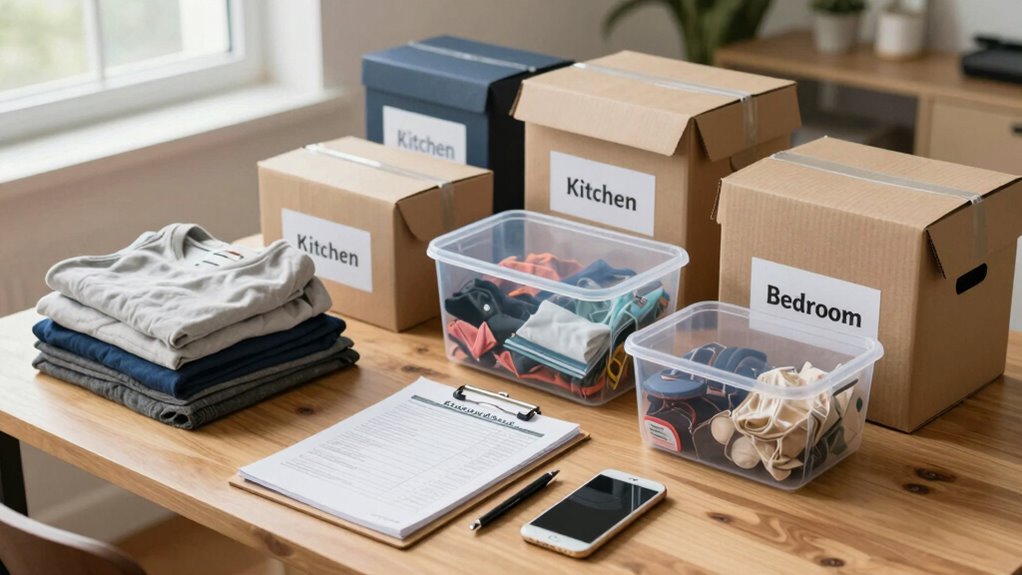

To create a household inventory before separation, gather all your belongings in one spot and focus on visible items in each room. Take clear photos or videos, noting details like brand, model, and value, and record serial numbers and receipts if available. Organize items into categories like electronics or clothing, and use labeled bins for storage. Keep a master list and update it regularly. If you want to learn more tips, there’s plenty to discover ahead.

Get gifts for the two of you delivered free with Prime
- Fast, free delivery on millions of items
- Prime Video, Amazon Music and more included
- Member-only deals all year
Key Takeaways
- Gather all belongings from main areas into a central location for easy documentation.
- Take detailed photos or videos of each item, including serial numbers and purchase details.
- Categorize items logically (electronics, clothing, collectibles) for organized tracking.
- Record descriptions, brand, model, purchase date, and value for each item.
- Store the inventory and supporting documents securely and update regularly.

Creating a household inventory might seem overwhelming, but it’s an essential step in protecting your home and belongings. When you’re preparing for a separation, having a detailed record of your possessions can make a significant difference, especially if you need to file insurance claims later or settle property disputes. A well-organized inventory helps you understand what you own, guarantees you’re adequately covered by insurance, and simplifies the process of dividing assets.
Start by gathering all your belongings into one central location. This could be your living room, bedroom, or any space where you can see everything clearly. As you go through your items, take photos or videos of each room, focusing on valuable items like electronics, jewelry, artwork, and furniture. This visual documentation serves as proof for insurance claims if your possessions are damaged or stolen. Be sure to include details like brand, model, purchase date, and estimated value. Writing down serial numbers and receipts, if available, further strengthens your record.
Gather belongings in one spot, then photograph and document key details for insurance and proof of ownership.
Next, create categories for your belongings—such as electronics, clothing, kitchenware, and collectibles. This categorization keeps your inventory organized and makes it easier to locate specific items later. When listing items, be precise. Instead of just “TV,” specify the brand, size, and model. The more detailed your descriptions, the smoother the process if you need to file an insurance claim or prove ownership. Don’t forget to include items stored in closets, garage, attic, or storage units, as these often get overlooked but are equally important.
Storage organization is vital for maintaining your inventory. Use clear plastic bins with labels for different categories, and keep a master list of what’s stored where. This approach saves time when you need to reference an item or retrieve belongings. Keeping your inventory updated as you acquire new possessions or dispose of old ones ensures it remains accurate and useful.
Having an updated household inventory makes it easier to navigate the complexities of separation. It provides clarity over what items belong to whom, helps prevent disputes, and offers peace of mind knowing you’re prepared for insurance claims. Proper storage organization complements your inventory by making everything accessible and well-documented. This systematic approach not only safeguards your possessions but also streamlines the process of dividing assets, giving you confidence during a challenging time.
clear plastic storage bins with labels
As an affiliate, we earn on qualifying purchases.
As an affiliate, we earn on qualifying purchases.
Frequently Asked Questions
How Detailed Should My Household Inventory Be?
Your household inventory should be detailed enough to accurately reflect property valuation, helping you fairly divide assets. You’ll want to organize your inventory clearly, categorizing items like furniture, electronics, and jewelry. Include descriptions, purchase dates, and estimated values. This level of detail guarantees a thorough record, making it easier during negotiations or legal proceedings. Proper inventory organization minimizes disputes, ensuring both parties understand the property’s worth and contents.
Should I Include Digital Assets in My Inventory?
Yes, you should include digital assets and online accounts in your household inventory. Document all digital assets like cryptocurrencies, digital wallets, and valuable online accounts such as email, social media, and cloud storage. List usernames, passwords, and relevant details. This guarantees you have an all-inclusive record during separation, helping you manage and secure your digital presence, and simplifies the process of dividing digital assets later.
How Often Should I Update My Household Inventory?
You should update your household inventory regularly—ideally, whenever you acquire or dispose of significant items, or when there are major life changes. Keep your financial documentation current, review legal considerations, and make certain everything remains accurate. Staying proactive helps you avoid disputes and simplifies the separation process. By maintaining an up-to-date inventory, you safeguard your assets, support your claims, and stay organized for any legal or financial decisions ahead.
What Tools Can I Use to Create My Inventory?
You can use inventory software like Sortly or Encircle to create your household inventory easily. These tools let you organize items, add details, and generate reports. Incorporate photo documentation by taking pictures of your belongings within the app, making it clear and complete. This visual evidence helps in case of disputes or insurance claims. Combining software with photo documentation ensures your inventory is thorough, organized, and ready when you need it.
How Do I Handle Sentimental Items in the Inventory?
When handling sentimental items, it’s important to recognize their emotional attachment and sentimental value. You should list these items separately in your inventory, noting their significance, and consider taking photos for memory preservation. If you’re unsure whether to keep or let go, reflect on the emotional impact and whether holding onto the item genuinely brings joy. Prioritize your well-being, and handle these items with care and respect.
Conclusion
Creating a household inventory is like laying a sturdy map for a journey—it guides you smoothly through the twists and turns of separation. By taking the time to document your belongings, you’re not just protecting your assets, but also clearing a path for a fresh start. Think of it as planting a seed for peace of mind; with everything in order, you’ll find it easier to move forward and embrace new beginnings.
Fall Picks
fall essentials
As an affiliate, we earn on qualifying purchases.