
Creating a mobile-friendly moving out budget worksheet helps you track income, expenses, and savings as a newly single person. Focus on estimating costs like rent, utilities, moving supplies, and transportation while setting savings goals for emergencies. Managing your essential expenses within 30% of your income is key for financial balance. If you want a simple, organized way to plan and stay on top of your finances during this shift, you’ll find useful tips and tools ahead.
Key Takeaways
- Include categories like rent, utilities, groceries, transportation, and healthcare to track all essential expenses.
- Set savings goals, aiming to save at least 5% of income for emergencies and future needs.
- Estimate moving costs based on move distance, packing supplies, and potential professional services.
- Allocate up to 30% of gross income for rent to maintain financial stability.
- Regularly update your worksheet to monitor spending, manage debt, and adjust your budget as needed.
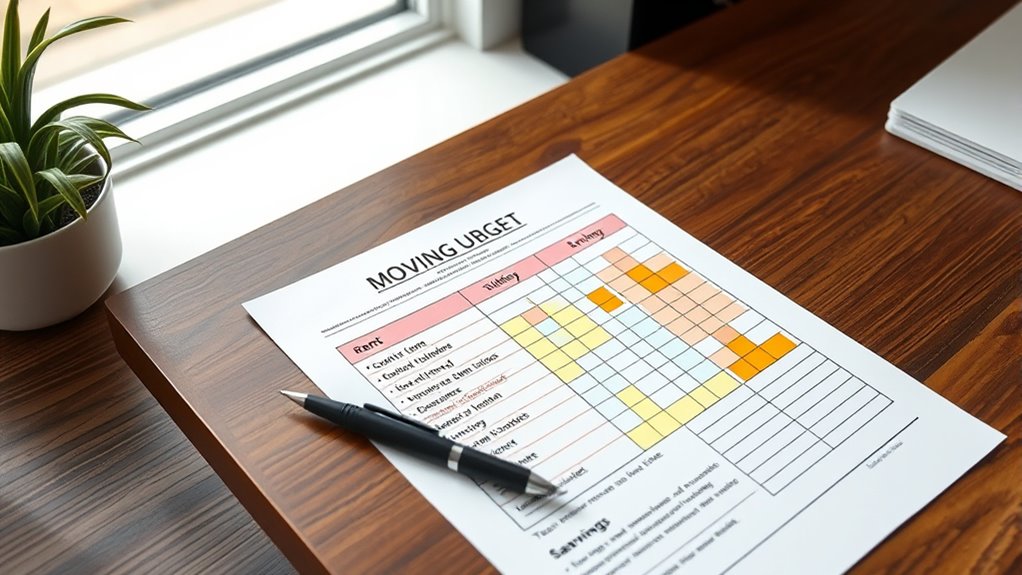
Moving out on your own can be both exciting and overwhelming, especially when it comes to managing your finances. Creating a solid budget worksheet helps you stay organized and ensures you’re prepared for the costs ahead. Start by evaluating your income; knowing your monthly earnings gives you a clear baseline for all your financial plans. Once you understand how much money you have coming in, you can divide your expenses into categories like rent, utilities, groceries, transportation, and healthcare. Tracking each of these helps prevent overspending and highlights areas where you might need to cut back.
Moving out on your own requires a well-planned budget to stay organized and prepared for expenses.
It’s important to set savings goals early on. Aim to save at least 5% of your income for emergencies and future needs. Having a safety net makes unexpected expenses less stressful and keeps your finances stable. If you have any debts, consider how you’ll manage or pay them off. Creating a plan to tackle these debts gradually can prevent them from becoming overwhelming and ensures you’re building good financial habits.
Using budgeting templates or spreadsheets is a smart way to keep everything in check. You can find free Google Sheets templates or printable worksheets that help you track your spending and savings. Customizing these tools allows you to adjust categories and amounts as your situation changes, providing a clear picture of your financial health. Regularly updating your worksheet helps you stay accountable and makes it easier to spot potential issues before they grow. Budgeting tools are widely available online, which makes it easier to find a format that suits your needs and preferences. Additionally, understanding financial literacy can help you make more informed decisions about your money.
When planning your moving costs, estimate expenses realistically. Local moves might cost between $350 and $1,500, while long-distance moves can range from $900 to $6,000. Remember to budget for packing supplies like boxes and tape, and consider hiring professional movers if your move is complicated or large. Don’t forget storage costs if you need to store belongings temporarily, and include tips for movers in your overall budget. Being thorough with these estimates prevents surprises on moving day.
Finally, consider your essential expenses like rent, utilities, groceries, transportation, and healthcare. Allocate up to 30% of your gross income for rent to keep your budget balanced. Plan for recurring bills such as electricity, water, internet, and insurance. Also, factor in transportation costs—whether you own a car or rely on public transit—and medical expenses. Budgeting for these essentials ensures you can cover your basic needs without stress. Keeping track of these expenses in your worksheet helps you maintain financial stability as you start this new chapter.
Frequently Asked Questions
How Can I Save Money While Moving Out Alone?
You can save money while moving out alone by downsizing your belongings to reduce moving costs, especially since charges are based on volume or weight. Choose a local move instead of a long-distance one to cut expenses considerably. Ask friends for help or rent a trailer instead of hiring professional movers. Additionally, compare rental options in affordable areas and budget for all upfront costs to avoid surprises.
What Should I Include in My Emergency Fund?
Your emergency fund should cover essentials like housing, utilities, food, healthcare, debt payments, and transportation—think of it as a safety net big enough to catch you from a skyscraper! Keep these funds in an accessible account, like a savings or money market. Regularly review and adjust based on your living costs and income stability, ensuring you’re prepared for unexpected surprises, no matter how wild they might be.
How Do I Estimate Utilities for a New Place?
You can estimate utilities for a new place by researching average costs for your apartment size and location. Check with your landlord or previous tenants about typical bills. Budget around $150 to $300+ monthly, including electricity, gas, water, internet, and other essentials. Remember, costs vary seasonally and by energy efficiency. Monitoring your actual bills over time will help you adjust your budget accurately and avoid surprises.
When Should I Start Planning My Move Financially?
Start planning your move financially at least 6 to 12 months in advance. This gives you enough time to set aside savings, streamline your spending, and strategize your savings stance. Early planning prevents panic, prioritizes payments, and provides flexibility for fluctuating expenses. By beginning early, you’ll better balance budgeting, brace for unexpected costs, and build a solid financial foundation, making your move smooth, stress-free, and successful.
Are There Budgeting Tips Specific for Single Renters?
Yes, as a single renter, you should prioritize budgeting for rent, utilities, and groceries first. Use the 30% rule to guarantee your rent stays manageable, and allocate funds for savings and emergencies. Consider sharing costs with roommates to save more. Track your expenses regularly, and take advantage of budgeting tools or apps to stay on top of your finances. Flexibility and consistency are key to maintaining an affordable, stress-free living situation.
Conclusion
Now that you have your moving out budget worksheet, you’re building a foundation for independence—think of it as planting seeds for your new chapter. As you navigate this journey, remember that every dollar managed wisely is a stepping stone toward freedom and stability. Picture your future self standing tall in your new space, confident and secure. With careful planning, you’re not just moving out—you’re stepping into a brighter, more autonomous life.