

A visitation schedule template for co-parents helps you create a clear, consistent plan for sharing custody that fits your family’s needs. It typically outlines detailed days and times for transfers, holiday arrangements, and special events. Popular options include alternating weeks, 2-2-3, or weeklong custody with mid-week visits. Using these templates can reduce conflicts and make schedules easier to follow. Keep exploring to find more ideas for customizing a plan that works best for your children and you.
Key Takeaways
- Use customizable templates from tools like Custody X Change or OurFamilyWizard to create tailored visitation schedules.
- Select a schedule type (e.g., alternating weeks, 2-2-3, or week with mid-week visits) suited to your family’s needs.
- Clearly specify custody exchange days, times, and holiday arrangements in the template for clarity.
- Incorporate contingencies and special occasions, such as school holidays or birthdays, into the schedule.
- Utilize visual aids and calendar integrations to help co-parents coordinate and adjust the schedule easily.
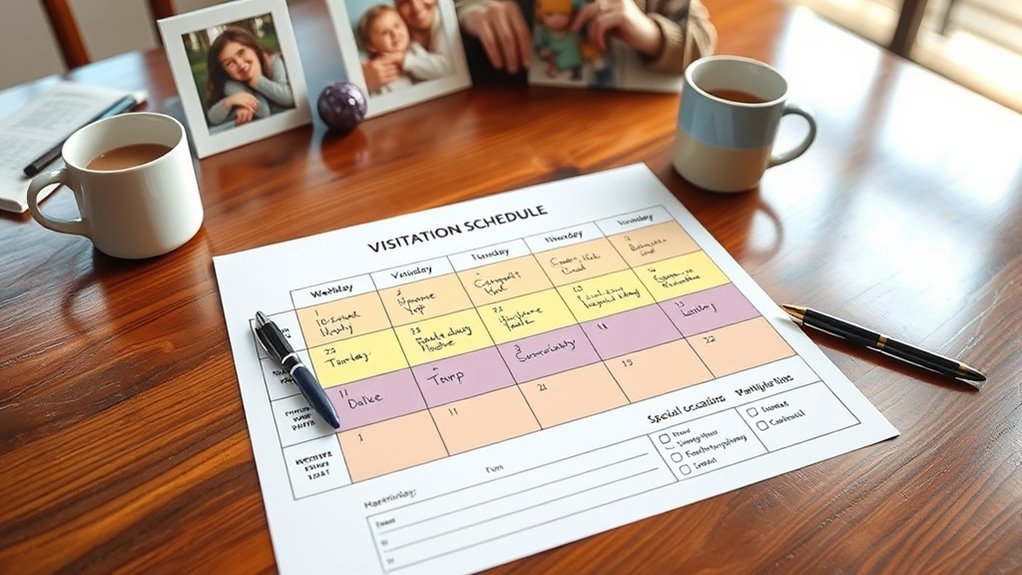
Creating a clear and consistent visitation schedule is essential for co-parents seeking to minimize conflicts and provide stability for their children. When you establish a well-structured plan, it helps everyone understand their responsibilities and reduces misunderstandings. With a variety of schedule types available, you can choose one that best fits your family’s needs. An alternating weeks schedule is straightforward—parents switch custody every week or every two weeks—giving children a predictable routine while allowing each parent ample time with them. The 2-2-3 schedule offers a more balanced approach, where one parent has two days, the other two days, then one parent has three days, repeating with roles reversed. This pattern provides frequent contact for both parents and maintains consistency. The 3-4-4-3 schedule splits the week into two segments, with parents rotating three or four days at a time, which ensures balanced parenting time and easier handoffs.
Structured visitation schedules like alternating weeks, 2-2-3, and 3-4-4-3 ensure stability, fairness, and predictability for children and co-parents.
You might also consider combining weeklong custody with mid-week visits, especially if you live close enough for easy exchanges. This setup allows a parent to have the child for a full week, with an additional midweek visit, maintaining steady contact. Alternatively, the weekend and weekday split assigns specific weekends and certain weekdays to each parent, creating a predictable pattern that fits many families’ logistics. When selecting a schedule, think about important factors like how close you live to each other, your relationship dynamics, your child’s age, and their developmental needs. For instance, very young children may benefit from shorter, more frequent exchanges, while older children might handle longer periods away from a parent.
Your schedule should include clear elements—exact days and times for custody exchanges during weekdays and weekends, holiday arrangements, and provisions for special occasions like birthdays or school breaks. Defining specific start and end times helps avoid confusion during handoffs, and including contingency plans can address unexpected events or schedule changes. Several tools can help you create and customize your visitation schedule, such as Custody X Change, OurFamilyWizard, and Custody Navigator. These platforms offer templates and visual aids that make planning easier and more detailed. Courts also provide sample schedules tailored to different ages and parenting styles, which can serve as useful references or starting points. Additionally, considering the role of technology in managing schedules can greatly improve communication and coordination between co-parents.
Opting for a structured visitation schedule offers many advantages. It establishes predictable routines that reduce stress and behavioral issues for children. Clear, enforceable agreements help minimize conflicts and promote cooperation between parents. Additionally, these templates facilitate equitable sharing of responsibilities, improve communication through calendar integrations, and provide legal clarity to support custody arrangements. When planning holidays, consider rotating or evenly splitting major celebrations to ensure fairness. Explicitly defining start and end times, especially on holidays, prevents misunderstandings. Incorporate provisions for school holidays, birthdays, and cultural events, and clarify how these override regular visitation. If holidays fall on a custody switch day, having a backup plan avoids conflicts. Overall, a well-designed visitation schedule not only benefits your child’s stability but also promotes smoother co-parenting relationships.
Frequently Asked Questions
How Flexible Should the Visitation Schedule Be?
You should make your visitation schedule as flexible as possible within reason, balancing fairness and your child’s needs. Be open to adjusting plans for holidays, special events, or unexpected situations. Communicate clearly with the other parent, and prioritize cooperation to reduce conflict. Flexibility helps everyone adapt to life’s changes, supports your child’s development, and strengthens your co-parenting relationship, ultimately creating a more positive environment for your family.
How to Handle Last-Minute Changes in the Schedule?
When a last-minute schedule change hits, embrace your inner superhero — cape optional. Document everything, stay flexible, and communicate clearly using shared tools. If it’s an emergency, prioritize the child’s safety and adapt swiftly. Keep calm, avoid conflicts, and explain changes gently to your child. Remember, your goal is stability, so always aim for solutions that put your kid’s well-being first, even if plans go awry at the last second.
What Legal Considerations Exist for Visitation Agreements?
When creating a visitation agreement, you need to consider legal enforceability, ensuring it’s in writing, signed, and filed with the court. Courts approve plans that serve the child’s best interest, taking into account factors like stability and emotional bonds. Violations can lead to penalties, and any modifications require court approval. Keep detailed records of violations or changes, as these support enforcement or adjustments to the agreement.
How to Address Conflicts Between Co-Parents?
Think of conflict as a storm on a calm sea—you need to steer your boat carefully. To address co-parenting conflicts, communicate openly and focus on your child’s needs. Use mediation, set clear boundaries, and avoid negative talk about the other parent. Practice patience, seek therapy if needed, and remember that staying calm helps you navigate through disagreements. Your goal is to keep the journey smooth for your child’s well-being.
How Can Schedules Accommodate Special Occasions or Holidays?
You can accommodate special occasions or holidays by creating flexible, clear schedules that prioritize these important days. Consider alternating holidays every other year or sharing the day between parents. Plan ahead by discussing and confirming arrangements early, including pickup times and locations. Incorporate traditions and specific activities into the plan, and be open to adjustments if needed. A well-structured schedule guarantees your child experiences meaningful celebrations with both parents, reducing conflicts.
Conclusion
Think of a visitation schedule like a well-tended garden; with consistent care and clear boundaries, it blooms beautifully. When I first helped a co-parenting couple create their schedule, they told me it was like planting seeds—they needed patience and communication to see the fruits of their efforts. Just as a garden thrives with regular attention, your co-parenting relationship flourishes when plans are clear and respectful. Keep nurturing it, and watch your bond grow stronger every day.