

Effective communication is the foundation of healthy relationships, yet finding the right tools can be overwhelming. The best relationship communication tools help couples express themselves clearly, listen actively, and resolve conflicts constructively. The top pick, Where Should We Begin? Card Game by Esther Perel, stands out for fostering deep conversations, while options like the Questions for Couples Journal promote ongoing reflection. However, each tool comes with tradeoffs—some prioritize fun, others focus on emotional intelligence, and a few require a significant time investment. Continue reading for a detailed comparison to help you choose the best fit for your relationship needs.
Key Takeaways
- The most effective tools encourage honest, vulnerable conversations without judgment.
- Interactive formats like card games and journals foster ongoing engagement better than static resources.
- Tools focusing on emotional intelligence often lead to more meaningful connection than simple question-based options.
- Price and complexity vary widely; premium options tend to offer richer experiences but require greater commitment.
- Different relationship stages and personalities benefit from tailored tools—what works for newcomers may not suit long-term couples.


More Details on Our Top Picks
Where Should We Begin? Card Game by Esther Perel for Couples & Friends
This card game stands out for its ability to spark meaningful, emotionally rich discussions, making it an ideal choice for couples or friends seeking to deepen their connection. Compared to the Questions for Couples Journal, it offers a more interactive experience with 200 prompts designed for real-time storytelling, which can foster greater vulnerability. However, its adult-only focus limits its use for broader family or group settings, and some might find the prompts repetitive after multiple sessions. Unlike the BestSelf Intimacy Deck, which emphasizes honest dialogue, this game encourages vulnerability through narrative, but it requires dedicated time and openness to be truly effective.
Pros:- Encourages deep, meaningful conversations and emotional connection
- Designed by renowned relationship expert Esther Perel
- Includes 200 thought-provoking prompts for engaging storytelling
- Suitable for intimate date nights and social gatherings
Cons:- Limited to adult participants, not suitable for children
- Requires a dedicated time commitment for in-depth discussions
- Some users may find prompts repetitive over time
Best for: Couples or friends looking to strengthen emotional bonds through engaging, thought-provoking conversations
Not ideal for: Users seeking quick, casual interactions or games suitable for children or mixed age groups
- Number of Cards:200
- Players:2-6
- Age Range:Adult
- Material:Cardstock
- Model:Edition
- UPC:197644901753
- Best Sellers Rank:#6,732 in Toys & Games
- Rank in Card Games:#164
Our verdict“This card game is perfect for couples or friends wanting to explore emotional depths and build genuine connection through guided conversations.”
Questions for Couples Journal: 400 Questions to Enjoy, Reflect, and Connect with Your Partner
This journal makes the list for its straightforward approach to fostering ongoing dialogue, offering 400 questions that help couples reflect and connect at their own pace. Unlike the Esther Perel card game, it lacks interactive prompts but provides a wealth of material for daily or weekly reflection, making it ideal for couples who prefer written conversations. It doesn’t include activities or guided exercises, which might limit engagement for those seeking more dynamic interaction. Compared to the BestSelf Intimacy Deck, which offers curated topics for specific moments, this journal supports continuous growth through regular reflection, but it may feel less spontaneous or playful.
Pros:- Encourages meaningful, ongoing communication between partners
- Contains a large number of questions for sustained engagement
- Helps couples reflect on their relationship and grow closer
- Simple and easy to use without requiring additional activities
Cons:- Lacks interactive or guided exercises for variety
- May not appeal to couples preferring verbal or spontaneous dialogue
Best for: Couples who enjoy journaling and want to deepen their understanding through regular written reflection
Not ideal for: Partners seeking quick, interactive activities or those who prefer verbal conversations over writing
Our verdict“This journal is well-suited for couples committed to regular written reflection but less so for those looking for immediate, playful interaction.”
BestSelf Intimacy Deck – 170 Conversation Cards for Couples
This set excels at fostering honest dialogue and emotional growth, especially for couples in long-term or long-distance relationships. Its 170 curated questions cover diverse topics, supporting genuine intimacy and understanding, similar to Esther Perel’s game but with a slightly more structured focus on connection. Compared to the Questions for Couples Journal, it offers a tactile, conversation-starting tool rather than written prompts, making it more suitable for active engagement. The design and packaging make it a gift-ready option, but some couples seeking casual fun may find the questions too intense or repetitive after multiple uses.
Pros:- Encourages honest, deep conversations and emotional openness
- Suitable for various relationship stages and long-distance couples
- Beautifully designed, gift-ready packaging
- Curated topics promote genuine intimacy
Cons:- Limited appeal for couples seeking casual or fun interactions
- Conversation-based only, no physical activity component
- Some questions may feel repetitive over time
Best for: Couples seeking meaningful, in-depth conversations to strengthen their bond, regardless of relationship stage
Not ideal for: Those looking for lighthearted or casual interaction without deep emotional topics
- Number of Cards:170
- Categories:7 curated topic categories
- Designed in:Austin, TX
- Material:Durable card stock
Our verdict“This deck provides a meaningful way for couples to deepen their emotional connection through curated, heartfelt conversations.”
Effective Communication and Empathy: How to Communicate Better With Social Skills and Confidence to Create Lasting Relationships and Connect … and Witty Banter
This book makes the list for its practical, actionable advice on improving communication, empathy, and social skills, offering tools that can benefit a wide range of relationship types. Unlike physical card decks, it provides structured guidance and techniques, including tips on witty banter to boost social ease. While it doesn’t have the immediate interactivity or playful element of game-based tools, it’s better suited for those who want to develop lasting skills and confidence in communication. However, the lack of specifics on content depth or the author’s credentials makes it less ideal for readers needing comprehensive or authoritative guidance.
Pros:- Provides clear, actionable communication strategies
- Focuses on building confidence and empathy
- Includes tips on witty banter to improve social interactions
- Applicable across various relationship contexts
Cons:- No detailed content overview or credentials provided
- Lacks interactive or engaging exercises
Best for: Individuals or couples seeking practical, skill-based strategies to enhance their communication and social confidence
Not ideal for: Readers looking for quick-fix or playful interaction tools rather than in-depth skill development
Our verdict“This book suits those wanting to develop real-world communication skills for lasting relationships and social ease, not quick or playful activities.”
Nonviolent Communication: A Language of Life
This book introduces proven tools for fostering healthier, more understanding relationships through nonviolent communication techniques. It offers practical methods to improve empathy and understanding in both personal and professional settings, making it a versatile resource. Compared with Esther Perel’s card game and the BestSelf Intimacy Deck, this book emphasizes internal skill-building and mindful communication rather than conversation prompts. Its focus on empathy and compassion makes it ideal for those committed to transforming conflict into connection, but the content can be dense and requires practice to master, which might deter readers seeking quick results.
Pros:- Provides practical tools for empathetic, respectful communication
- Enhances understanding and emotional connection
- Applicable across diverse relationship types
- Focuses on long-term relationship health
Cons:- Requires effort and practice to implement effectively
- Content can be dense and complex for some readers
Best for: Individuals or couples dedicated to cultivating empathy and understanding through mindful communication
Not ideal for: People seeking immediate, conversational tools or casual relationship advice
Our verdict“This book is best for those committed to developing a compassionate, empathy-centered approach to communication for healthier relationships.”
Healthy Communication With Your Partner: Discover the Benefits of Communicating with Emotional Intelligence, Empathy & Effective Listening Skills to Turn Conflict into Connection
This book offers a straightforward approach to improving communication through emotional intelligence, empathy, and active listening. Unlike the Couples Therapy Workbook, which guides structured conversations, this resource focuses on teaching core skills that can be applied in everyday interactions. Its practical strategies are ideal for couples who want to develop better habits but may lack the desire for lengthy exercises or in-depth work. However, the lack of detailed content descriptions and absence of format specifics mean it might feel too broad or superficial for some readers. Compared with the Communication Skills for Couples book, it emphasizes emotional skills over conflict resolution tactics, making it suitable for couples ready to focus on emotional nuance rather than immediate problem-solving.
Pros:- Provides clear, actionable strategies for better communication
- Focuses on emotional intelligence and empathy
- Helps transform conflicts into opportunities for connection
- Accessible language suitable for beginners
Cons:- Limited details on content structure and depth
- No customer reviews or specific format information
Best for: Couples seeking practical, skill-based approaches to improve everyday communication and reduce conflicts.
Not ideal for: Readers who prefer guided exercises or structured activities rather than conceptual strategies.
Our verdict“Ideal for couples who want to learn practical communication skills without complex exercises or therapy frameworks.”
The 5 Love Languages® Card Game
The 5 Love Languages® Card Game makes connecting through shared understanding both fun and meaningful. With 300 cards covering questions, date ideas, and quizzes, it offers a variety of prompts that help couples explore each other’s emotional needs—much like the Questions for Couples Journal, but in a more interactive format. Compared to the Partners Are Human set, it leans more toward romantic and practical exploration, making it better suited for couples seeking to deepen love languages rather than emotional vulnerability. The game’s engaging variety means it can be used regularly to keep the relationship fresh, but it requires both partners’ active participation and may not appeal to couples looking for solo tools or therapy-focused approaches.
Pros:- Encourages meaningful conversations about love needs
- Includes diverse card types to keep interactions lively
- Helps discover new date ideas and express needs
- Based on proven love languages framework
Cons:- Requires both partners to be willing to participate
- Limited to couples, not suitable for solo use
Best for: Couples wanting to explore love languages, needs, and enhance romance in a playful, engaging way.
Not ideal for: Couples with reluctance to participate in games or those seeking intensive emotional work.
- Number of Cards:300
- Type of Cards:Questions, Date Ideas, Quizzes
- Recommended Age:16+
- Based on:The 5 Love Languages by Dr. Gary Chapman
Our verdict“Best for couples who want a playful, structured way to deepen understanding of each other’s love languages.”
Couples Therapy Workbook: 30 Guided Conversations to Re-Connect Relationships
This workbook offers a series of 30 guided conversations designed to improve communication and intimacy through structured exercises. Unlike the more flexible Partners Are Human cards or the playful 5 Love Languages game, it provides a clear pathway for couples committed to deep work. The structured format can be highly effective for those who prefer guided discussions, but it demands a time commitment and patience to complete all exercises. Its focus on therapist-style guidance makes it less suitable for couples seeking quick fixes or casual interaction. Compared to the Communication Skills for Couples book, it emphasizes step-by-step conversations that promote understanding, making it better suited for couples ready to dedicate time to meaningful dialogue.
Pros:- Provides clear, guided conversations for relationship growth
- Helps improve communication and foster understanding
- Structured approach suitable for couples willing to invest time
- Designed to enhance intimacy over sustained effort
Cons:- Requires commitment to complete all exercises
- Less effective for couples seeking spontaneous or casual tools
Best for: Couples serious about structured, guided conversations to rebuild trust and intimacy.
Not ideal for: Those looking for quick, casual interactions or who are not willing to commit to completing exercises.
Our verdict“Ideal for couples prepared to engage in structured, guided conversations to rebuild or deepen their connection.”
Communication Skills for Couples: Guide to Improve Communications, Resolve Conflict, Deepen Intimacy, Strengthen Marriage and Create a Healthy Relationship
This book aims to provide a comprehensive set of strategies for couples wanting to improve communication, resolve conflicts, and deepen intimacy. Compared to the more interactive The 5 Love Languages® Card Game, it offers a broader, more systematic approach to building a healthy relationship. However, the lack of specific content details or tools makes it less immediately actionable, especially for couples seeking quick results or engaged in active exercises. Without detailed reviews or format specifics, it risks feeling too generic or theoretical. It suits couples who prefer reading and reflection over interactive tools, making it less ideal for those seeking hands-on, engaging activities.
Pros:- Provides practical strategies for communication and conflict resolution
- Aims to strengthen marriage and promote healthy dynamics
- Offers a broad overview suitable for self-guided learning
- Accessible language for a wide range of couples
Cons:- Lacks detailed content or specific tools
- No clear indication of exercises or format
Best for: Couples interested in a broad, practical guide to strengthening their relationship through improved communication and conflict resolution.
Not ideal for: Those preferring interactive or activity-based tools over reading-based approaches.
Our verdict“Suitable for couples who prefer to learn relationship skills through reading and reflection rather than interactive activities.”
Communicate Your Feelings (Without Starting a Fight): What to Say and What Not to Say to Your Partner
This book stands out for its straightforward approach to expressing feelings without escalating conflicts. Unlike more comprehensive guides like Rejoin: A Marriage Counseling Workbook, which offers structured exercises, this book emphasizes specific language strategies that can be immediately applied to daily conversations. The focus on emotional wellness makes it especially helpful for those who struggle with sensitive topics, but its lack of detailed content or reviews might leave some wanting more depth. Overall, it’s a solid choice for individuals seeking concise, actionable advice on emotional communication.
Pros:- Provides practical communication strategies for emotional expression
- Focuses on maintaining emotional wellness and avoiding fights
- Easy to understand and implement in daily conversations
Cons:- No detailed content or chapter overview available
- Lacks customer reviews or ratings for validation
Best for: Individuals who want clear, practical tips for expressing feelings without conflict
Not ideal for: Couples looking for in-depth exercises or extensive relationship rebuilding tools
- Format:Paperback
- Pages:120
- Language:English
Our verdict“This book is best suited for those seeking quick, effective advice on emotional expression without the need for comprehensive exercises.”
Relationship Communication Skills: Talk Without Fighting, Rebuild Trust, and Deepen Intimacy with Solutions to Reconnect
Compared with Communication Miracles for Couples, which focuses on easy tools for harmony, this book emphasizes rebuilding trust and fostering deeper emotional connections. While it offers practical strategies suitable for couples who want to repair or strengthen their bond, it doesn’t provide detailed chapter breakdowns or specific techniques, which may leave readers wanting more structure. It’s ideal for couples committed to long-term growth, but those seeking quick tips might find it lacking in immediate actionable steps.
Pros:- Focuses on rebuilding trust and intimacy
- Provides practical solutions for relationship challenges
- Suitable for couples committed to ongoing growth
Cons:- No detailed content or chapter overview provided
- Lacks specific exercises or step-by-step techniques
Best for: Couples aiming to rebuild trust and deepen emotional intimacy
Not ideal for: New couples or those seeking quick conflict resolution without addressing underlying trust issues
- Format:eBook & Paperback
- Pages:150
- Language:English
Our verdict“This book makes sense for couples dedicated to rebuilding trust and fostering long-lasting emotional bonds.”
Communication Miracles for Couples: Easy and Effective Tools to Create More Love and Less Conflict
This book offers accessible communication tools designed to foster more love and reduce conflicts, making it a good fit for couples who prefer straightforward, easy-to-apply strategies. Unlike the more structured Rejoin: A Marriage Counseling Workbook, which involves guided exercises, this book emphasizes quick, practical techniques that can be adopted immediately. The limited information on specific methods and absence of detailed reviews mean users might need to supplement with additional resources for deeper growth. It’s ideal for couples looking for simple, harmony-enhancing tools rather than intensive therapy exercises.
Pros:- Provides easy-to-understand communication strategies
- Helps promote relationship harmony and reduce conflicts
- Accessible for couples at any relationship stage
Cons:- No detailed content or reviews available
- Limited information on specific techniques or exercises
Best for: Couples seeking simple, effective strategies to create more love and less conflict
Not ideal for: Partners needing detailed, structured exercises or long-term therapy guidance
- Format:Paperback
- Pages:130
- Language:English
Our verdict“This book is best suited for couples wanting quick, practical tools to enhance love and reduce disputes.”
Reconnect: A Marriage Counseling Workbook
Compared with Love More, Fight Less, which offers practical exercises for conflict management, this workbook emphasizes guided conversations and relational exercises designed for sustained growth. Its structured approach makes it suitable for couples willing to dedicate time to long-term improvements, but the lack of detailed content or reviews might make it harder for new users to gauge its effectiveness. If a couple is committed to ongoing work and prefers a guided format, this workbook can be a valuable resource, though it demands a real investment of time and effort.
Pros:- Provides practical exercises and guided conversations
- Focuses on emotional reconnection and communication
- Supports ongoing relationship development
Cons:- May require significant time commitment
- No detailed content or reviews provided
Best for: Couples seeking a structured, guided approach to long-term relationship strengthening
Not ideal for: Couples looking for quick fixes or those hesitant to commit to regular exercises
- Format:Paperback
- Pages:200
- Language:English
Our verdict“This workbook is ideal for couples dedicated to consistent, guided effort to rebuild and strengthen their relationship over time.”
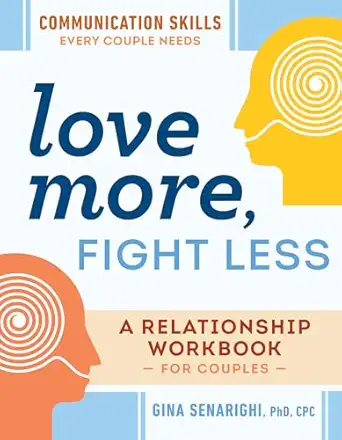
Love More, Fight Less: Communication Skills Every Couple Needs
Compared with Rejoin: A Marriage Counseling Workbook, which offers structured exercises, this book emphasizes practical communication skills through exercises aimed at strengthening bonds and resolving conflicts. Its focus on fostering love while reducing fights makes it suitable for couples seeking active skill-building, but the lack of detailed content or reviews might leave some uncertain about its depth. It’s especially useful for couples who prefer a workbook format that balances conflict management with emotional bonding but may require a commitment to regular practice.
Pros:- Provides practical exercises for communication and conflict resolution
- Helps strengthen emotional bonds
- Focuses on fostering love and reducing fights
Cons:- No detailed content or reviews available
- Requires consistent effort to see results
Best for: Couples wanting to improve conflict resolution skills and deepen emotional bonds
Not ideal for: Couples needing comprehensive therapy tools or in crisis situations
- Format:Paperback
- Pages:180
- Language:English
Our verdict“This workbook is well-suited for couples committed to actively improving communication and emotional connection through regular practice.”

How We Picked
I evaluated these relationship communication tools based on several key criteria: usability, engagement level, depth of conversation, emotional impact, and value for the price. I looked at how well each product facilitates honest dialogue, whether it appeals to different types of couples, and if it encourages ongoing use. Tools that promote active participation and emotional growth ranked higher, as they tend to foster stronger connections over time. The ranking reflects a balance between accessibility for beginners and richness for experienced couples, aiming to help a range of relationship dynamics.Factors to Consider When Choosing Relationship Communication Tools
Choosing the right relationship communication tool depends on your specific needs, goals, and relationship stage. Considering factors like format, depth, and ease of use can help you avoid common pitfalls, such as selecting overly complex options or those that don’t align with your communication style. Keep in mind that no single tool works for everyone; your choice should support genuine connection and be sustainable for regular use.Format and Engagement Style
Deciding between cards, journals, books, or workshops impacts how often and easily you’ll use the tool. Interactive formats like card decks tend to promote spontaneous, playful conversations, making them ideal for couples who want lighthearted but meaningful exchanges. Journals and workbooks, on the other hand, support reflective dialogue and are better suited for couples committed to deeper emotional work. Choose a format that matches your lifestyle and comfort level, as this influences ongoing engagement.
Depth of Content
Some tools focus on surface-level topics, fostering casual conversations, while others dive into core emotional issues, building trust and vulnerability. If your goal is to improve daily communication and reduce misunderstandings, simpler question decks may suffice. For addressing longstanding conflicts or deepening intimacy, look for resources that facilitate more profound, structured dialogue. Avoid tools that are too superficial if your relationship needs substantial emotional work.
Ease of Use and Accessibility
Ease of use influences whether you’ll stick with a tool long-term. Simple, straightforward products with clear instructions encourage consistent use, especially for busy couples or beginners. More complex or time-consuming options, like comprehensive workbooks, can deliver richer results but may require dedicated time and emotional energy. Balance your willingness to invest time against the potential benefits, and opt for tools that feel manageable within your routine.
Price and Long-Term Value
While some relationship tools are inexpensive or free, premium options often provide more comprehensive experiences, deeper insights, or additional resources. Consider your budget and whether the investment aligns with your relationship goals. Cheaper tools might be suitable for casual use or experimentation, but longer-term improvements often benefit from investing in higher-quality or multi-session options. Be wary of overly generic products that lack customization or emotional depth.
Compatibility with Relationship Stage and Goals
Assess where your relationship stands—newly dating, long-term committed, or navigating challenges—so you pick a tool that matches your needs. For example, new couples may prefer lighthearted, fun conversation starters, while long-term partners might seek resources for conflict resolution or emotional growth. Clarifying your goals—whether improving daily communication or addressing specific issues—can prevent choosing a product that doesn’t deliver the targeted outcomes.
Frequently Asked Questions
How do I know if a communication tool is right for my relationship?
Choosing the right tool depends on your specific needs, communication style, and relationship goals. Start by identifying whether you want to foster more fun, deepen emotional intimacy, or resolve conflicts. Look for products that match your comfort level—some couples thrive with playful, quick exercises, while others prefer structured, reflective activities. Trying out a few different formats over time can help you discover what resonates most and creates meaningful progress.
Can these tools replace couples therapy?
While many relationship communication tools can significantly improve dialogue and understanding, they are generally not substitutes for professional therapy when facing serious issues. These tools work well for ongoing maintenance, strengthening emotional bonds, and addressing minor conflicts. However, if your relationship involves persistent problems, unresolved trauma, or abuse, consulting a licensed therapist remains essential for effective, safe intervention.
Are communication tools suitable for long-distance couples?
Absolutely. Many tools, especially digital or printable decks and journals, are designed to be used remotely. They facilitate meaningful conversations regardless of physical distance, helping partners stay connected and deepen their understanding. Look for options that are easy to access and use asynchronously, so you can engage in dialogue at your own pace, making long-distance relationships feel more intimate.
How often should we use a relationship communication tool?
Frequency depends on your goals and schedules, but consistency often yields the best results. Incorporating short, regular sessions—such as weekly or biweekly—can build habits that improve overall communication. Avoid making it a chore by choosing tools that feel natural and enjoyable; this encourages ongoing use without causing frustration or fatigue. Remember, quality conversations matter more than frequency.
Do these tools work for all relationship types?
Most tools are designed for romantic partnerships but can be adapted for friendships or family relationships. Their effectiveness depends on the willingness of both parties to participate openly and honestly. For non-romantic relationships, look for resources that focus on understanding, empathy, and active listening, which are universally valuable. Additionally, select tools that respect individual boundaries and comfort levels to foster trust and genuine connection.
Conclusion
For couples seeking a versatile, all-around solution, the Where Should We Begin? Card Game by Esther Perel earns the title of best overall due to its ability to spark meaningful, vulnerable conversations. Those on a budget or preferring quick, reflective exercises might find the Questions for Couples Journal offers excellent value. For couples prioritizing emotional growth and long-term connection, investing in a premium set like the BestSelf Intimacy Deck or specialized workbooks can provide richer experiences. Beginners may prefer simple, guided tools to avoid feeling overwhelmed, while long-term partners looking to resolve issues should consider more comprehensive options. Ultimately, your choice depends on your relationship stage, goals, and personal preferences—use this guide to find the best fit for your journey.